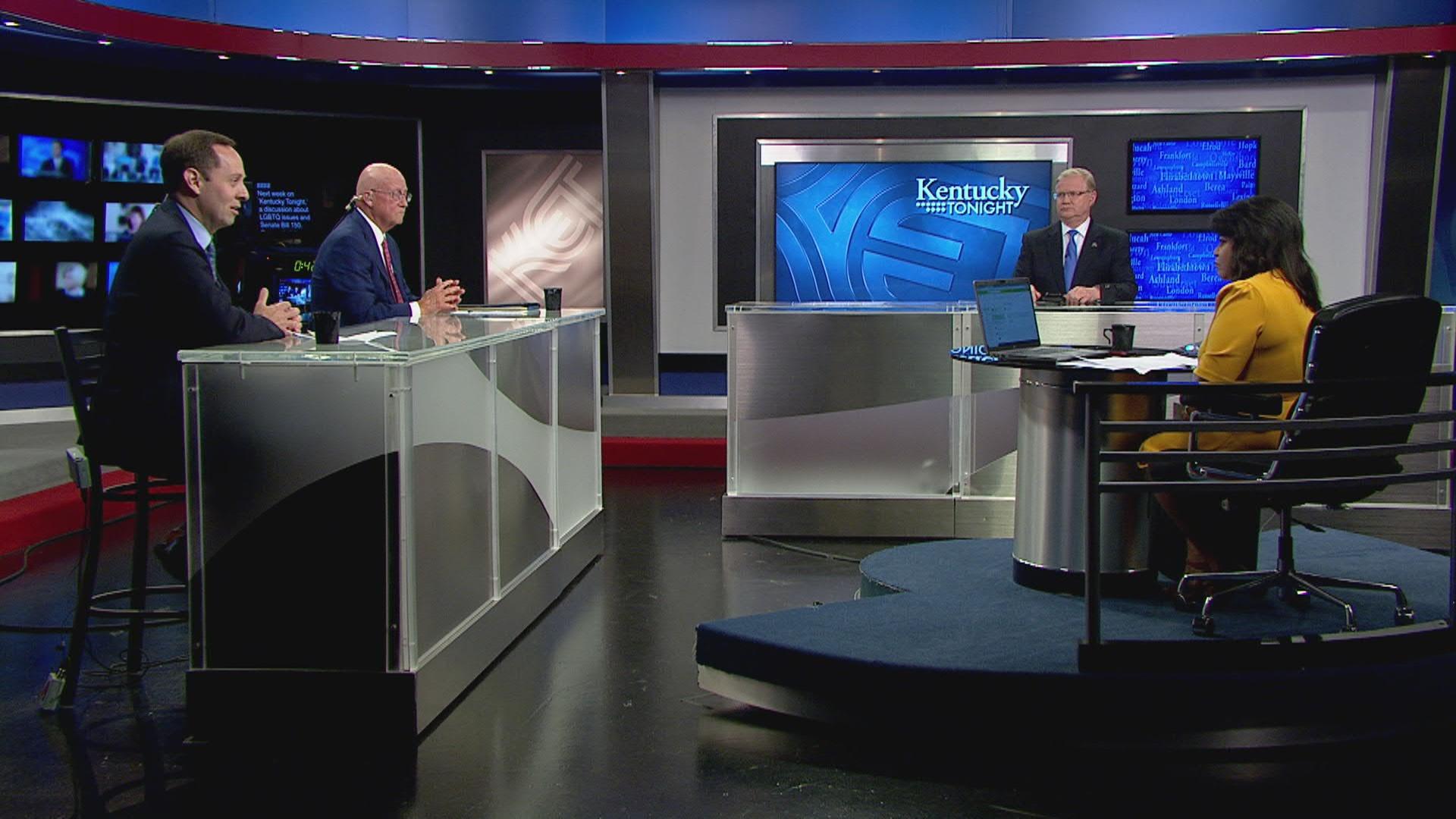
Horse racing fans hoping to spend a sunny June day under the twin spires of Churchill Downs had their dreams upended earlier this month when the track announced the remainder of its spring meet would be moved to Ellis Park in Henderson.
The action comes after Churchill Downs executives, state officials, and the new Horseracing Integrity and Safety Authority met in an emergency summit to discuss 12 thoroughbred fatalities at the track since May, including seven deaths during Kentucky Derby week alone. Without a known cause linking those fatalities, the Horseracing Integrity and Safety Authority or HISA, which was created by Congress in 2020, recommended a suspension of the meet at the historic Louisville track until a comprehensive investigation of its racing surfaces could be completed.
“I congratulate Churchill on taking the high road and making the decision to suspend racing,” says Bill Lear, a Lexington attorney and vice chairman of The Jockey Club. “The public wants to know that we are doing the absolute best we can to deal with the safety of these athletes.”
But some racing advocates contend HISA’s move was unnecessary. State Senate Majority Floor Leader Damon Thayer (R-Georgetown), who has worked in marketing and communications for various racing entities including the Breeders’ Cup, contends the recent string of deaths at Churchill Downs is a “statistical anomaly” for a track that, he says, otherwise has one of the best safety records in the United States.
“At this time, I don’t believe there is anything wrong with the racing surfaces at Churchill Downs,” says Thayer. “I don’t think they needed to move their meet to Ellis Park.”
Thayer worries that HISA would’ve have forced a shutdown of Churchill had the track not agreed to suspend racing there. He contends a federal agency like HISA shouldn’t be able to take that kind of action against a racetrack that follows existing rules and protocols.
A Call for National Oversight of Racing
Created by the federal Horseracing Integrity and Safety Act, the new authority is charged with oversight of racetrack safety as well as equine anti-doping and medication control. The bipartisan legislation came after years of efforts by racing advocates and animal welfare groups to create national standards on safety for horses and jockeys at America’s racetracks.
Natalie Voss, editor in chief of The Paulick Report, an independent horse racing publication, says previous attempts to unite state racing commissions and racetracks into voluntary regulatory compacts never proved successful. She says some states and tracks were willing to abide by such proposed agreements while others were not.
“This law went forward the way that it did largely because the existing system wasn’t working,” says Voss. “I don’t know whether it’s a perfect solution or not, but it certainly is designed to be a complete solution as far as getting everyone on the same page.”
HISA, which is under the jurisdiction of the Federal Trade Commission, instituted regulations on track safety in July 2022; the medication rules took effect last month. Thayer and Eric J. Hamelback, CEO of the National Horsemen's Benevolent and Protective Association (HBPA), say HISA “botched” the implementation of the new protocols, creating chaos and leaving many horsemen and women confused as to what rules were in place from one week to the next.
“Part of the problem with the rollout is that they tried to do too much too soon and they lost the confidence of the rank-and-file horsemen,” says Thayer, who says he supports a national standardization of rules on medicating horses. “So there’s not a lot of confidence out there at racetracks across America that HISA is a way to go.”
Thayer questions whether HISA is even legal, saying the 10th Amendment to the U.S. Constitution gives states the authority to regulate things not explicitly delegated to the federal government. There are now six lawsuits challenging the constitutionality of HISA, including one brought by HBPA. Hamelback says his organization doesn’t object to standardizing safety rules and protocols but does question the federal oversight.
“We want to make sure that delegating governmental authority to a private entity is the legal thing to do,” says Hamelback.
Opponents of HISA also question what it will cost the industry to implement the new regulations, which Hamelback says could be as much s $66 million. There are also concerns about states that don’t have enough veterinaries to conduct the required testing, and whether HISA might try to exercise greater control over racetracks in the future.
The constitutional argument against HISA may be on shaky legal ground, according to Lear, who helped draft the federal act. He contends other parts of the constitution give Congress the power to regulate interstate commerce, which he says includes horse racing. Lear says racetracks including Churchill Downs and Keeneland supported passage of the federal legislation as did the Jockey Club, the Breeders’ Cup and animal welfare groups the Humane Society of the U.S. and the American Society for the Prevention of Cruelty to Animals.
Kentucky Thoroughbred Association Executive Director Chauncey Morris says the lawsuits against HISA are coming from only certain players in the industry.
“You have nine states that are not party to challenging HISA,” says Morris. “Those states are responsible for 87 percent of the starts in racing.”
The Future for HISA and Regulatory Authority
From the standpoint of horsemen and women, Hamelback and Thayer argue the industry doesn’t get proper credit for actions it has already taken to protect equine athletes. Hamelback says voluntary measures taken at tracks have reduced equine fatalities by nearly 38 percent since 2009.
Racing advocates also point to new technology under development to promote horse safety and welfare. One device called StrideSafe uses a sensor on a horse to track its body movements at high speeds. Unusual changes to that data may indicate the horse is at risk of an injury or breakdown. Morris says multiple trainers are testing the StrideSafe monitors.
“We want to do everything that we possibly can in order to ensure the safety of our equine and human athletes,” says Morris.
That wouldn’t preclude a role for a strong, national regulatory agency. Lear says HISA is important because not all horsemen follow the rules. He points to 27 federal indictments recently issued for violations of medication rules in racing.
While Thayer acknowledges there are some bad actors in the industry, he says he believes most American horsemen follow the rules, care deeply about their animals, and take excellent care of them.
“They just want to know what the rules are, they want to know that they’re applied equally, adjudicated fairly, and they want them to be consistent cross state borders,” he says.
Thayer and Lear applaud HISA for engaging several respected Kentucky horse industry leaders, including former Kentucky Horse Racing Commission Executive Director Marc Guilfoil, former Keeneland President Bill Thomason, and former Gov. Steve Beshear. But they differ on how the authority should move forward.
If HISA is upheld as constitutional, Thayer says he wants federal lawmakers to revisit the act and narrow its focus to uniform regulation of medications used on horses. He says that will provide a safer environment for horses and jockeys, and more integrity for bettors. But Lear says the oversight panel can’t go back to only looking at medications because the existing statute requires it to promote track safety.
If HISA is overturned, Thayer wants states to revisit the compact idea. (He proposed such legislation in Kentucky a dozen years ago, which did pass the General Assembly.)
Lear contends trying to revive the idea of national or regional compacts isn’t the answer.
“To get people on board, you either have to agree to let them back out of any rule they don’t like, or you have to agree to let them back out all together,” says Lear. “That’s why the compact model didn’t work.”
Even something as seemingly simple as the equine injury database launched by the Jockey Club in 2008 isn’t without its challenges. Lear says the data reported there isn’t transparent because injuries aren’t listed by racetrack. Lear says that concession was required to get the data to begin with. Morris says that privacy allows for the collection of more thorough data on injuries and probable causes.