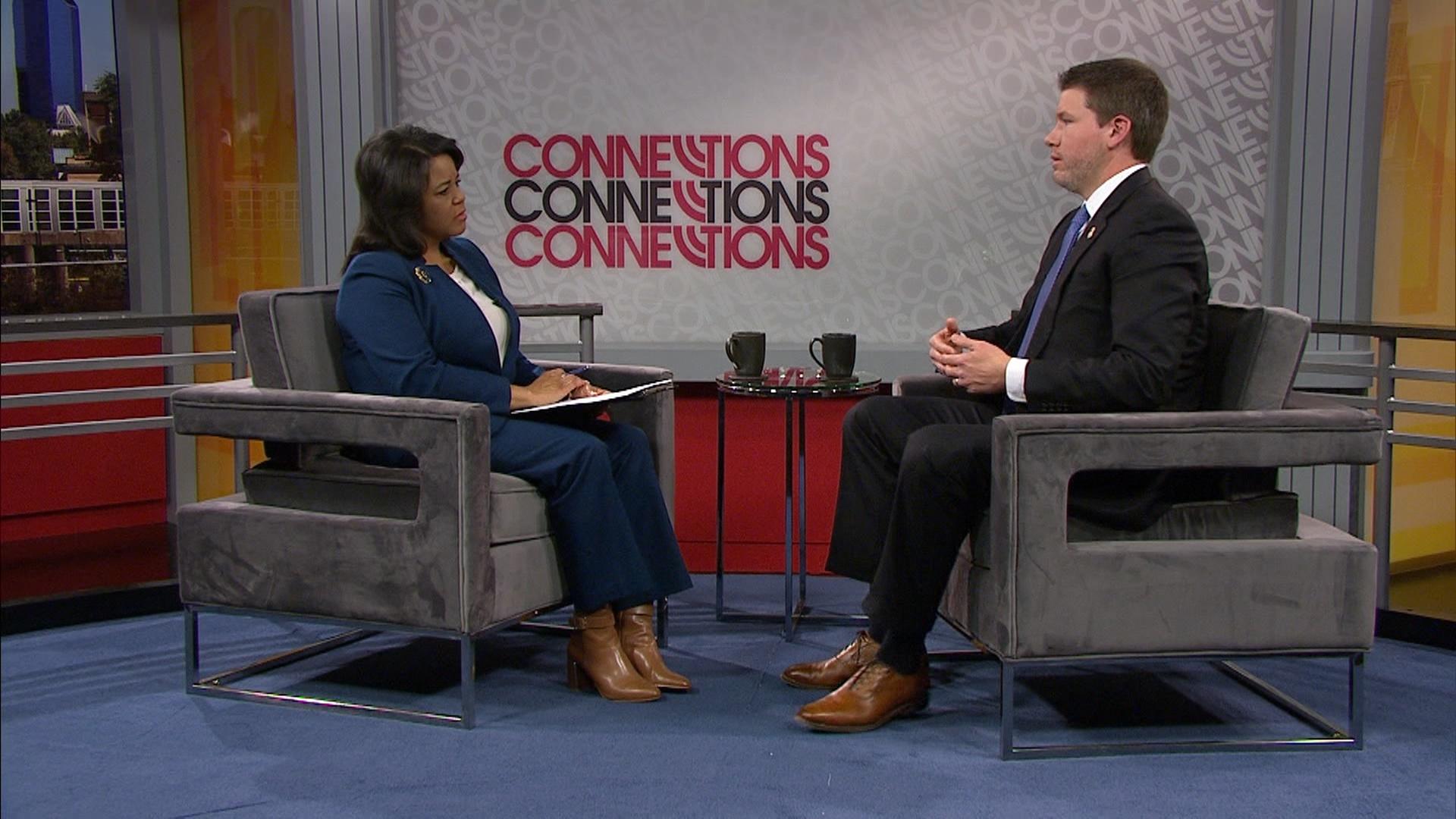


Battling the drug epidemic has been a priority for federal prosecutor Robert Duncan during his tenure with the U.S. Department of Justice. The Ashland native started as an Assistant United States Attorney for the Eastern District of Kentucky in 2005. In 2017, he became the U.S. Attorney for the office that covers 67 counties in the eastern half of the commonwealth.
Duncan's team has helped stem the tide of illicit opioids by targeting traffickers and distribution networks. But now they're finding the drug trade expanding to other deadly substances, including the synthetic opioid fentanyl as well as heroin, methamphetamine, and cocaine.
“It’s something that we have to be constantly vigilant about and we can't take our eye off the ball on any of these deadly drugs,” he says.
Duncan says his office is working on parallel tracks to fight criminal drug activity by prosecuting those in the illegal drug trade as well as medical professionals who improperly prescribe painkillers. One initiative targets dealers and traffickers who can be tied to specific overdose deaths.
“If we can establish that a person, because of their drug dealing, leads to the death of another, that's a mandatory 20 year sentence,” says Duncan. “If they are a prior convicted drug trafficker, that [sentence] increases to mandatory life.”
The Eastern District is one of 10 DOJ offices around the country to receive special funding to prosecute individuals who traffic fentanyl in quantities large or small. That initiative works in Fayette County.
Duncan is quick to point out that his prosecutors don't target people with a substance use problem.
“We make it very clear that we prosecute, that we go after drug traffickers,” he says. “We encourage folks that need help to seek help.”
Cracking Down on Prescription Drug Abuse
Earlier this year, DOJ launched an Appalachian regional task force to mine prescription drug data to find those who are unlawfully prescribing opioids or diverting prescription painkillers to illicit purposes.
“We want to focus on those bad actors in the medical community,” says Duncan, “those folks that are unscrupulous and that are putting greed before patient care.”
Research indicates that many people who are addicted to opioids got hooked after receiving a prescription for a painkiller following an injury accident or a medical procedure. Duncan says the health care industry is now much better about educating professionals about the dangers of over-prescribing opioids, even to patients with legitimate pain issues.
“We don't want to substitute our judgment as law enforcement professionals for those in the medical community that have the training and expertise,” he says. “We're going after those in that community, though, that cross that line and that are clearly not putting their patients' best interests at heart.”
The U.S. Attorney's office also supports addiction prevention through the USA HEAT program, which stands for Heroin Education Action Team.
“HEAT is comprised of family members who've lost loved ones to overdose deaths,” Duncan says. “They go out and are willing to share their stories in a public forum to talk about how their loved one came to addiction, how they struggled... and then ultimately how they lost life because of the addiction.”
Guns and Violent Crime
Data from the Federal Bureau of Investigation shows that violent crime is on the decrease nationally and in the Eastern District, according to Duncan. He attributes to the decline to two DOJ initiatives. Project Safe Neighborhoods is a collaboration between federal, state, and local law enforcement agencies along with community partners and civic leaders to develop comprehensive solutions to crime. Project Guardian also coordinates national and local law enforcement officials to prosecute offenders who use guns in crimes or who illegally purchase guns.
“In our district we are blessed with great local law enforcement partners,” says Duncan. “It’s been really my pleasure to get to work with these men and women who are daily on the front lines of keeping us safe.”
Duncan says his staff doesn't comment on gun policy debates. He says it's their job to enforce gun laws that are on the books.
That includes ensuring that people with domestic violence convictions don't possess firearms. He says abusers that are under court order to have no contact with their victim are prohibited from having guns for the period covered under the domestic violence order, usually about three years. Duncan says if an individual is convicted of a domestic violence offense under state law, they forever lose their right to have a firearm.
Crimes Against Children and the Elderly
U.S. Attorney General William Barr has made human trafficking a priority for DOJ. Duncan says that includes combating sex trafficking and the sexual exploitation of children. He says his office works with local and state officials as well as the FBI, the Secret Service, Department of Homeland Security, and other federal agencies with expertise in computer forensics to combat child pornography.
While he says some sex offenders may qualify for restorative justice programs that seek to repair the harm caused by their crime, Duncan says those who commit child pornography crimes should be treated differently.
“I think we have to keep the victims in mind when we talk about these offenses,” he says, “because when an image is created and an image is shared, that person is victimized over and over and over again.”
The U.S. Attorney is also working with federal and state agencies to address abuse and financial fraud targeting the elderly. In addition to investigating and prosecuting such crimes, Duncan says they also help educate senior citizens that any offer received by mail, email or telephone that looks too good to be true is likely a scam.
But even with these outreach efforts, Duncan says it's hard to stay ahead of the latest fraudulent schemes.
“With any type of criminal activity, when you start doing enforcement and educating the public,” he says, “the criminals adapt their methods.”