

Since the start of the recession in 2008, overall state funding for higher education in Kentucky has declined by more than a third. While most states are now increasing appropriations for their public colleges and universities, Kentucky is one of two states that continues to slash higher ed budgets.
The cuts have forced schools to become more efficient, says Kentucky Council on Postsecondary Education President Aaron Thompson. But the reductions have also resulted in tuition increases for students, little or no pay raises for staff and faculty, and reductions in vital support services.
“They did cut the fat and they had fat to cut, and they got to a point at where they started cutting the bone,” he says. “We now are at a point whereby if we don’t start reinvesting in higher education… then we’re going to create more harm.”
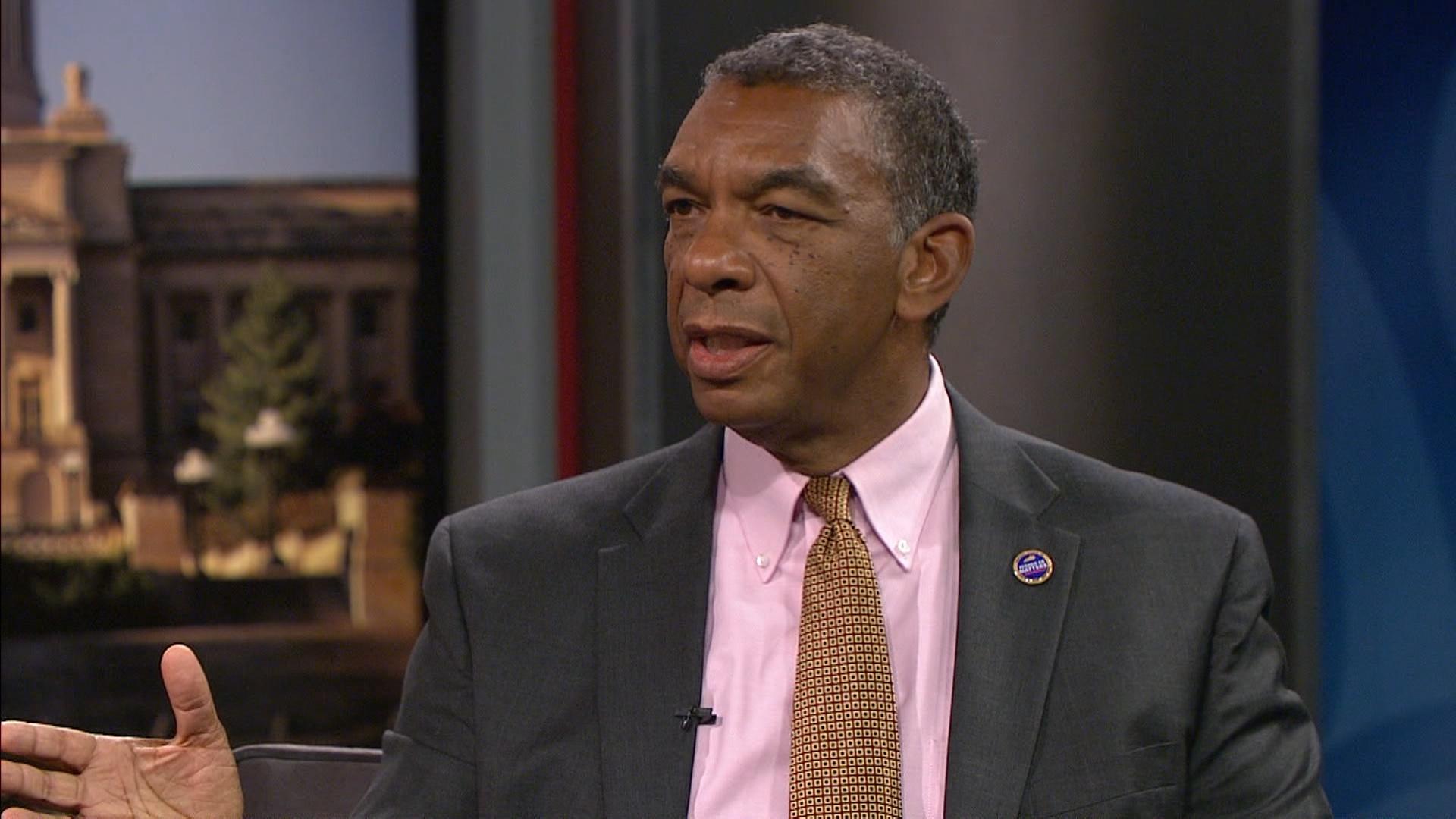
Thompson appeared on KET’s Connections to discuss state funding, school affordability, and getting more students into the college pipeline.
Funding Cuts Impact Affordability
Under CPE rules, Kentucky’s public universities and community colleges can only recoup 60 percent of state funding cuts through student tuition. Thompson says the council also caps the amount that schools can raise tuition and fees within a given two-year budget cycle.
Still, the average college tuition in Kentucky rose by nearly $2,900 between 2008 and 2018, according to the nonpartisan Center on Budget and Policy Priorities. Student debt is also on the increase. In the last 15 years, Thompson says the average college loan debt has doubled in the commonwealth from $14,000 to about $28,000 per student.
“We can’t deny there’s not an affordability problem here,” he says. “There is.”
That doesn’t mean that a technical credential or a college degree is beyond the reach of Kentuckians. Thompson says many prospective students don’t realize that there’s a difference between the tuition sticker price and what people actually pay after financial aid is added to the calculation. He says a forthcoming report from CPE shows that students completing a four-year degree in Kentucky only paid about 48 percent of the actual tuition costs. For students earning an associate degree or credential, the out-of-pocket costs are even lower, he says.
Yet many people still don’t know they’re eligible to receive financial aid. Thompson says that’s especially true among first-generation college students or students from low-income families who may never seek tuition assistance or apply too late to receive it.
Thompson says CPE and schools need to do a better job of communicating the true cost of a credential or degree to prospective students. He says they also need to help students understand that graduating with school-related debt isn’t a bad thing if the amount of loan is in line with the earning power of the degree or credential they’ve achieved.
“If I in fact borrow money and get that degree and get a job that allows me to pay the loan back and do other things, then that loan is an investment,” says Thompson. “If I don’t get that certificate or degree, then I think [that debt is] a chain around my neck forever.”
That doesn’t mean that students have to pursue a degree in technology, engineering, or health care fields. Thompson contends that liberal arts degrees do have value in the labor market.
“If you think about preparing our economy for five, 10, 15, 20 years down the road, we’re going to have to have these baccalaureate degrees as well as these advanced degrees to make that happen because these students are going to create jobs that we don’t even know exist yet,” he says.
Keeping Students in the College Pipeline
Since becoming CPE president about a year ago, Thompson has traveled the state on a listening tour to learn about the concerns of students, parents, educators, and community leaders. He says he’s hearing many of the same issues, whether he visits urban or rural parts of the commonwealth: People believe that higher education is important, but they don’t always know the best way to access it or pay for it. He says many people also have the misunderstanding that higher education only means a four-year degree, when it actually includes two-year degrees, technical credentials, or job-related certificates.
Currently only about 45 percent of Kentuckians have a postsecondary degree or credential. CPE wants to increase that to 60% by the year 2030. Thompson says the state is well on its way to achieving that goal, but several challenges lay ahead. There are fewer youth in the commonwealth, which means there are fewer students moving into the college pipeline. He says its incumbent upon education officials to direct as many of those students as possible into a college or university.
“We have to design a better pipeline between [pre-kindergarten through high school] and higher ed to really connect these students with an understanding that they can get a postsecondary credential that matters, that suits them,” says Thompson.
Another factor is that community college enrollments have dropped in the past few years as the economy has improved. Thompson says that creates another opportunity to inform people about the value of up-skilling, our enhancing a job certification they already have, as well as using community college attendance as cost-effective path to a full degree.
“You can get really your first two years of education at a much lower price and then move on to a four-year institution to finish your baccalaureate degree,” he says. “This can be used as an affordability pipeline… so it’s crucial that we’re helping our students to understand not only the career paths they can go into or the degrees or credentials they can get, but how to get it at the lowest price possible.”
Thompson says community college students who transfer to a four-year institution are 75 percent more likely to graduate than a student who is native to that school. That’s why he also wants to make it even easier for students to move from a Kentucky Community and Technical College campus to a full university.
Legislative Priorities for 2020
Lawmakers will craft a new state budget during the 2020 General Assembly session. Thompson says CPE will seek increased funding for higher education, which he says will likely need to funnel through the new performance-based funding model that ties state appropriations to a school’s ability to meet certain metrics.
“In order for a performance-funding model to really work, we have to put funding in that model,” he says.
Legislators did allocate $31 million in performance-based funding in the last state budget, which was divided among the state universities and colleges. But Thompson fears the focus on specific metrics like improving degree attainment and reducing achievement gaps between certain student groups could be counterproductive. He says that could force schools to direct their limited resources on meeting those metrics and drain funds away from other functions like student counseling and support services that he says are vital to help young people perform at their best while in school.
CPE also may explore more funding for the Work-Ready Scholarship program, which helps those with a high school diploma or GED pay for schooling to complete an industry-recognized certification. Thompson says the scholarships need to be rebranded to help people better understand the program and its benefits.
Finally Thompson hopes high school and colleges will put more emphasis on mental health counseling, financial literacy, and life skills training for students.
“These are the sorts of things that are crucial in the way that we’re helping our students not only to get a good college experience but how to use their lives once they get out of college,” he says.
Related Stories
Aaron Thompson on Kentucky’s Higher Education Goals
KCTCS President Jay Box Outlines Goals in Postsecondary Education