

The GOP tide that swept Donald Trump into the White House in 2016 also brought Republicans to power in the Kentucky House of Representatives for the first time in nearly a century.
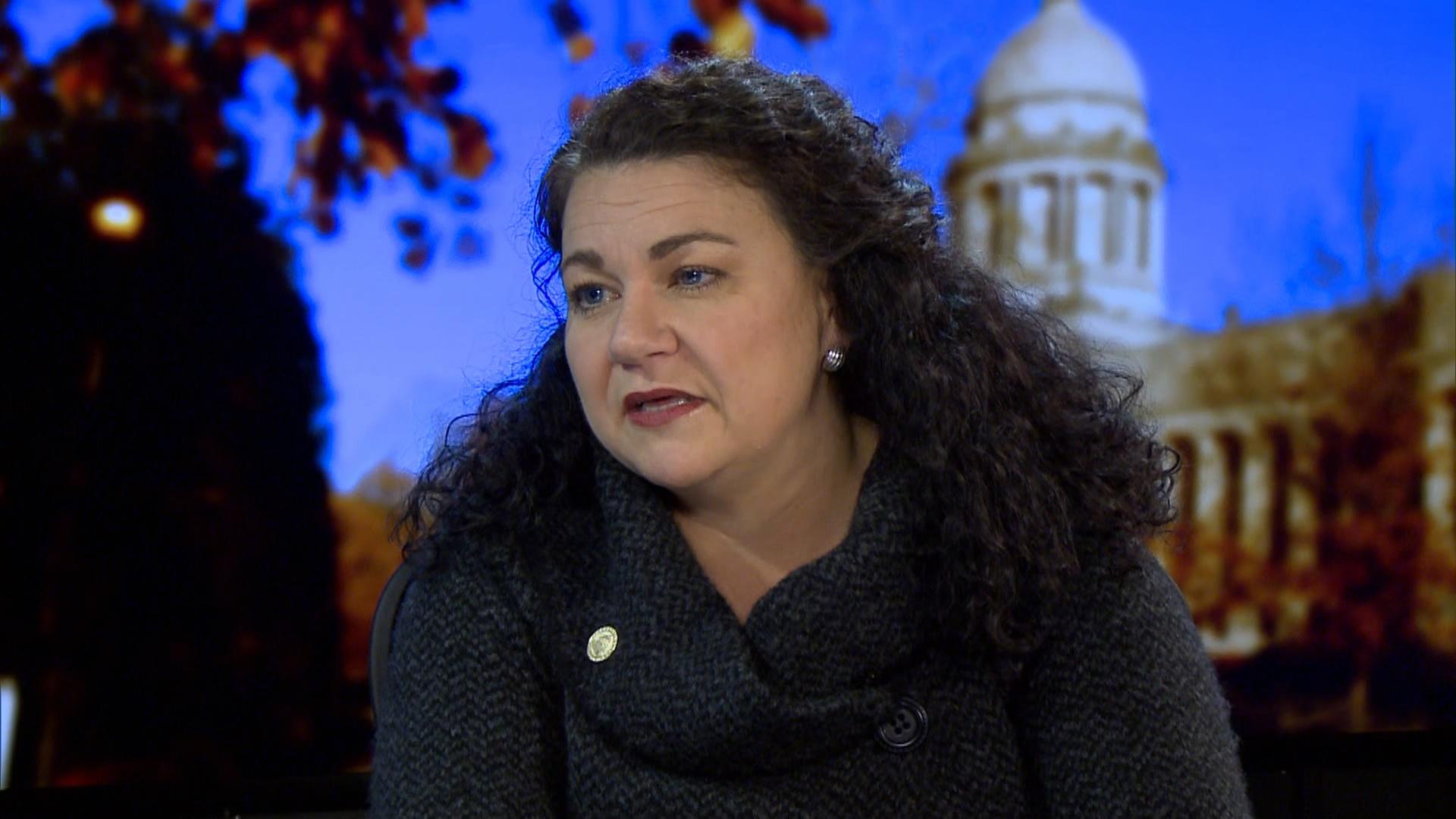
But Whitesburg journalist turned lawyer Angie Hatton was able to buck that GOP trend. The political newcomer was one of only five new Democrats to gain a state House seat that year, winning the race to represent Letcher County and part of Pike County.
Now in her second term, Hatton has been selected to serve as House minority whip, the leadership position that counts votes among Democratic representatives.
“Whipping votes tends to connotate (sic) arm-twisting and maybe bullying people into voting,” she says. “That is not my style.”
Instead, Hatton says she uses her mediation training to work with her caucus members to learn what they would need to be able to vote for a bill. Then she uses that information to try to negotiate changes to the legislation with Republican leaders.
Beshear Budget a ‘Good Start’
In addition to her leadership duties, Hatton also has two demanding committee assignments: The Appropriations and Revenue Committee and the Judiciary Committee.
“There has to be something wrong with me to want to stay on the two toughest committees,” Hatton jokes. “Judiciary is very tough: We have the controversial bills that I’ll have to vote on twice... and we have long bills that are really difficult to wade through... but I absolutely love it and wouldn’t trade that experience.”
This is the first time as an A & R member that Hatton will help prepare a new two-year spending budget for the state. It's also the first time for Gov. Andy Beshear, who presented his budget to lawmakers on Jan. 28.
“There's a lot I like about this budget,” says Hatton of the governor’s plan. “There are no spending cuts… that's pretty incredible.”
Hatton says Beshear made a "good start" at funding early childhood education and school safety needs. But the governor's proposal did not include money for full-day kindergarten or universal pre-kindergarten, which many education advocates have promoted. It also funded building security upgrades that were mandated in last year's school safety bill, but did not allocate money for more school counselors.
Beshear did include a $2,000 pay raise for public school teachers, fulfilling one of his campaign promises.
“It's so needed,” says the Democrat. “We have a shortage [of teachers] and we’ve had a general feeling that they aren’t appreciated… A raise helps with morale, and hopefully helps with recruitment and retention.”
Hatton credits Beshear for presenting a budget with what she calls responsible spending and realistic revenue projections. The governor proposed a small increase to the cigarette tax, but no increase to the gasoline tax. He also proposed sports betting revenues, but stopped short of endorsing fully expanded gaming, which he also touted on the campaign trail.
A sports betting measure has passed a House committee, but awaits a vote in the full House. Hatton says she thinks House Bill 137 has enough support for passage, but she says some Democrats are concerned that the legislation creates a new Class C felony (for tampering with the outcome of a sporting event or horse race) at a time when the state's correctional system is already severely burdened.
Finding Courage for Criminal Justice Reforms
Given escalating prison populations and expenses, Hatton says criminal justice reform is a high priority for her. The state is a national leader in the overall incarceration rate, as well as the rate of incarcerated women. Hatton attributes much of the problem to the epidemic of drug abuse.
“We are jailing the addicted for being addicted,” she says. “Incarceration doesn't cure addiction. They have to have some form of treatment before we turn them back out into their old environment.”
Lawmakers may also consider reforms to address the numbers of low-level offenders held prior to their trial because they cannot afford to pay their bails. Hatton concedes that in an election year legislators may be reluctant to pass measures that could be labeled as soft on crime.
“I believe that each of us can find the courage to do it,” she says. “We may not do it all at once and there may be a few unpopular things, but hopefully it will be packaged in a way that it’s a lot like a spoonful of sugar to help the medicine go down.”
Legislating from the Minority
Hatton says she's learning how to legislate from the minority, not only as a Democrat, but also as a woman and as an eastern Kentuckian. When she arrived in the House, Hatton says there were only eight females out of 100 representatives. Now she says there are 18 women from across the aisle and around the state.
“It is a sisterhood,” she says. “You feel like that you actually not only have a seat at the table, but you’ve become part of a voting block.”
The Democrat says it's also important to be a voice for people in Kentucky's Appalachian region
“Where I come from, we have obviously have less money, and often are less education, and we are less healthy,” says Hatton. “There's something about hardship that brings people together and ends old feuds, and makes people resolve that we have to work together to survive.”
Hatton says she's experienced the heartbreak of having friends and family move away to find work as the region's coal industry continues to crumble. She says lower unemployment numbers don't necessarily paint an optimistic picture for her district.
“It's not because jobs were created,” says Hatton. “It’s because people moved away or they gave up on trying to find work.”
Hatton is collaborating with other lawmakers to address two issues important to coal miners. She supports a Senate bill that would revoke the mining permits of coal companies that don't comply with performance bond requirements. Such bonding is used to pay miners' wages in the event of a shut down.
Hatton also wants to reverse a 2018 law that she says makes it harder for miners suffering from black lung disease to get workers compensation. Prior to that legislation, radiologists could diagnose black lung for state benefit claims. Now only pulmonologists can make that diagnosis. Hatton says most of them are located in either Louisville or Lexington, which forces ailing miners to travel great distances to get a diagnosis.
“[Miners] need support, they don’t need another barrier,” she says.