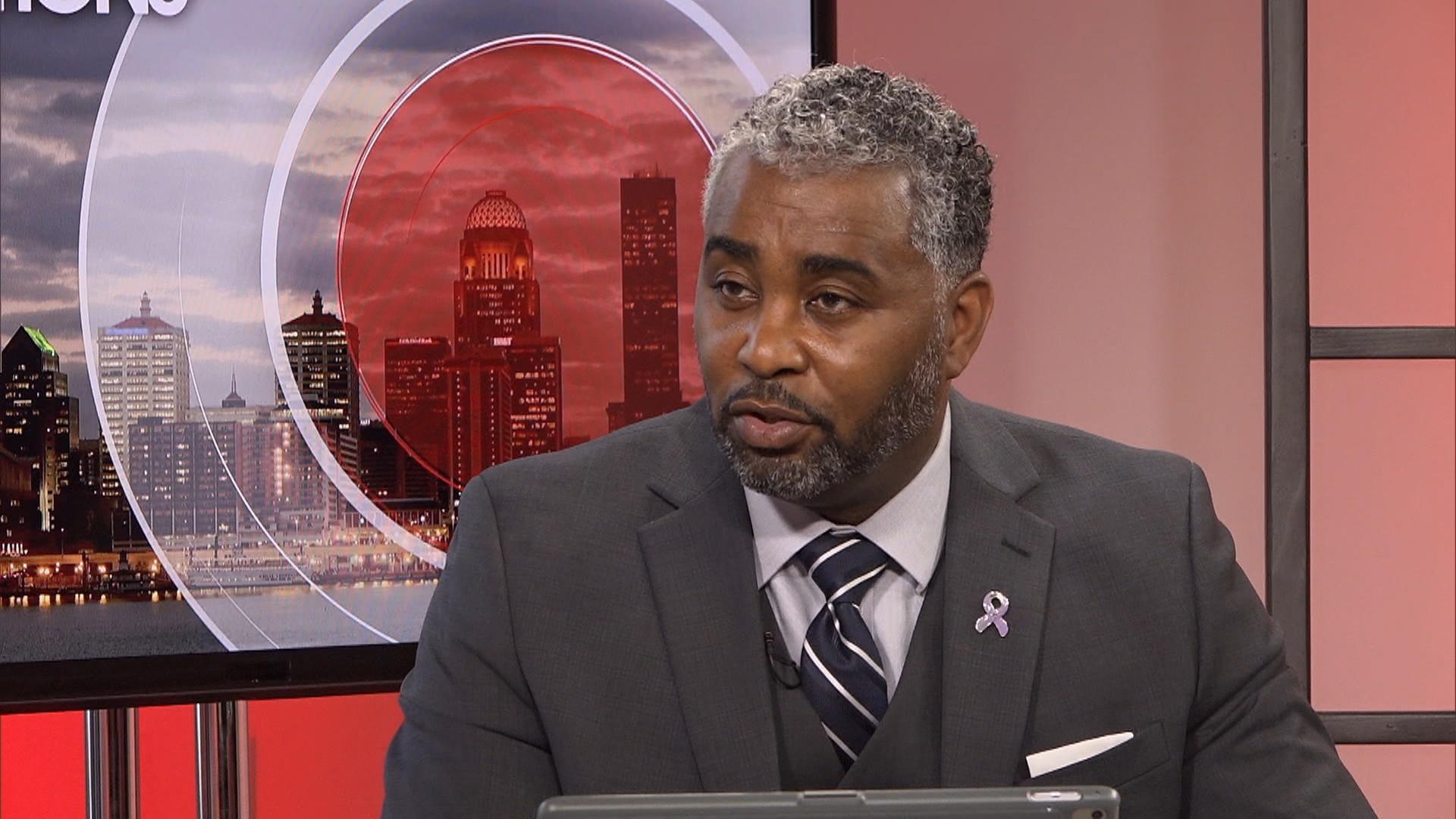


Pastor Edward Palmer isn’t the kind of minister who simply focuses on delivering a stirring sermon to his congregation every Sunday.
He is a man called to help the broken and disadvantaged in his church, in his community, and across the commonwealth by working to address racial bias in society, especially against those in the child welfare and criminal justice systems.
Palmer, who is also a certified diversity trainer, state Juvenile Justice Advisory Board member, and Radcliff city councilman, appeared on KET’s Connections to discuss his perspectives on criminal justice issues.
Diverting Youth Offenders from Jail
In 2014, the Kentucky General Assembly enacted Senate Bill 200, a sweeping overhaul of the state’s juvenile justice system, to address the increasing number of children being placed in detention. The legislation created a pre-court diversion process to prevent children who commit low-level offenses such as skipping school or running away from home from being detained.
Youth who commit serious crimes are still confined, but those involved in low-level offenses may be diverted from the criminal justice process and placed into programs like after-school tutoring, substance abuse treatment, family counseling, or community service activities.
Palmer says the bill has been successful in many ways. He says the number of offenders has decreased from more than 24,000 in 2013 to nearly 19,000 in 2019. Meanwhile, the percentage of offenders who get placed into a diversion program has increased from 40 percent to 55 percent in that same time period.
Diversion, according to Palmer, is an opportunity to correct poor behavior that saves taxpayer dollars and avoids immersing a child in the criminal justice process. He says 90 percent of kids who successfully complete their diversion program do not recidivate within three years. But even among children who don’t complete their diversion, 40 percent of them don’t commit another crime.
“What that’s telling us is that those kids did not need a jail or detention or some hard approach, they just needed a soft touch,” says Palmer. “They just needed a moment to sit down, rethink their behaviors, and they’re fine.”
Since SB 200 became law, the juvenile detention population in the commonwealth has declined by 40 percent. As a result, Palmer says the state has been able to close three juvenile facilities.
Disproportionate Minority Contact
But the results of SB 200 aren’t all good. Palmer says minority youth still make up a disproportionate number of children in state Department of Juvenile Justice detention. For example, Jefferson County now has 36 youth in detention, and 82 percent of them are African American, says Palmer. But blacks only account for 22 percent of the general population in Jefferson County.
Statewide, black youth are involved in 23 percent of complaints, despite representing a far smaller percentage of the overall population. Palmer says African Americans tend to be overrepresented in the number of complaints against youth, and underrepresented among those who are sent to a diversion program.
“We’re seeing the [overall detention] population shrink, which is a great thing,” says Palmer. “We still have a lot to do with disproportionality.”
Another problem, according to Palmer, is that many counties across the state don’t have adequate diversionary options for youth.
“We still see status offenders ending up in our detention centers, primarily for runaways,” he says. “It’s really a placement issue, it’s really about not having enough community resources available.”
Palmer is working with Senate Judiciary Committee Chairman Whitney Westerfield (R-Hopkinsville) to develop legislation to address these lingering challenges. In recent sessions Palmer and Westerfield have promoted a bill to collect more data on youth going through the juvenile justice system, and to require law enforcement and social service agencies to develop strategic plans to reduce racial disparities in their interactions with youth. That legislation has failed to gain traction, but Palmer says some agencies, including the Administrative Office of the Courts, have begun to develop those plans voluntarily.
Fix Individuals, Repair Communities
Palmer has been in the ministry for more than 25 years, and his diversity training projects take him across the nation. He is vice-chair of the National Coalition for Juvenile Justice, and he’s a fellow at the Center for Juvenile Justice Reform at Georgetown University. He says the roots of his advocacy work date back to his youth in the south side of Chicago.
“I grew up in a community where we saw black boys and black men carted off to jails and prisons as a result of the drug war,” says Palmer. “So it was this kind of upbringing that I think sparked a passion in me to see the playing field leveled for minority populations, specifically those populations that are disadvantaged on so many fronts.”
Palmer says there are a range of environmental factors that can prevent a community and its residents from thriving, such as a lack of healthy food choices, limited economic opportunities and recreational activities, poor housing, and too many liquor stores and payday lending businesses.
“All these are things that contribute to an unhealthy environment, which ultimately is a contributing factor to drug use,” he says.
Those issues not only contribute to substance abuse, but Palmer says they can also make breaking the cycle of addiction difficult. He says a person of color who goes into treatment for a substance use disorder usually has to leave their community and go to a place that is culturally very different from where they grew up, which can place an additional layer of stigma upon that person.
Then when their treatment is concluded, they return to their community and find the exact same environmental factors and challenges that led them into an addiction in the first place.
“If we fix the individual but we do nothing to fix the community, then the potential for reengaging in substance use disorder is high,” says Palmer. “So we’ve got to not only fix the individual but we’ve got to do something to repair the communities that they go back to.”
Palmer is encouraged by the recent announcement that the Jefferson County Attorney will no longer prosecute low-level marijuana possession cases. Currently African Americans in the county are six times more likely to be arrested for drug-related offenses than whites, says Palmer.
“So taking this off the table will go a long way to creating more of an equitable playing field when it comes to drug convictions here in Jefferson County,” he says.
Plus Palmer says research and practical experience has shown that communities can’t arrest their way out a drug problem.
“As a taxpayer, I do not want to spend hundreds of dollars incarcerating people for $15 [or] $20 worth of marijuana,” he says. “I only want to see folks incarcerated that are a threat to public safety.”
Giving Advantages to the Disadvantaged
In addition to juvenile justice reforms, Palmer also advocates for bail reform. He says it’s unfair to require money for a person’s freedom, especially when that means a poor person who committed a minor offense remains in jail, while a wealthier person who may have committed a more significant crime has the means to go free until trial. He says unnecessarily holding a person until trial can result in them losing their job, their home, and their family as well as other consequences.
“All the research tells us that if you remain incarcerated up until your trial, you’re most likely going to be convicted and most likely going to spend longer periods of time in prison,” he says.
As policymakers rethink the nature of criminal justice, Palmer wants them to consider these unintended consequences on the poor and people of color. Then he wants them to invest in these communities so they can be rebuilt from the ground up.
“I’m very passionate about seeing minority populations, disadvantaged populations advantaged so that they may experience some of the same outcomes that seem to be natural for whites and folks who are growing up in affluent communities,” says Palmer.