

It’s a glimmer of hope in an otherwise grim story about the drug epidemic in the commonwealth: Overdose deaths among Kentuckians are down, from 1,477 in 2017 to 1,247 in 2018.
That’s 230 fewer deaths in a state that has been ravaged by opioids and heroin.
“The numbers have been climbing successively, and so this year really marks the first time that we’re starting to see a downward trend, which is really wonderful,” says Sharon Walsh, director of the University of Kentucky’s Center on Drug and Alcohol Research.
To help continue that downward trend, the National Institutes of Health recently awarded an $87 million grant to Walsh’s center to explore ways to reduce overdose deaths in 16 Kentucky counties by 40 percent in the next four years. UK will work with the state Cabinet for Health and Family Services and the Justice and Public Safety Cabinet on the ambitious project.
“It is a very bold goal,” she says.
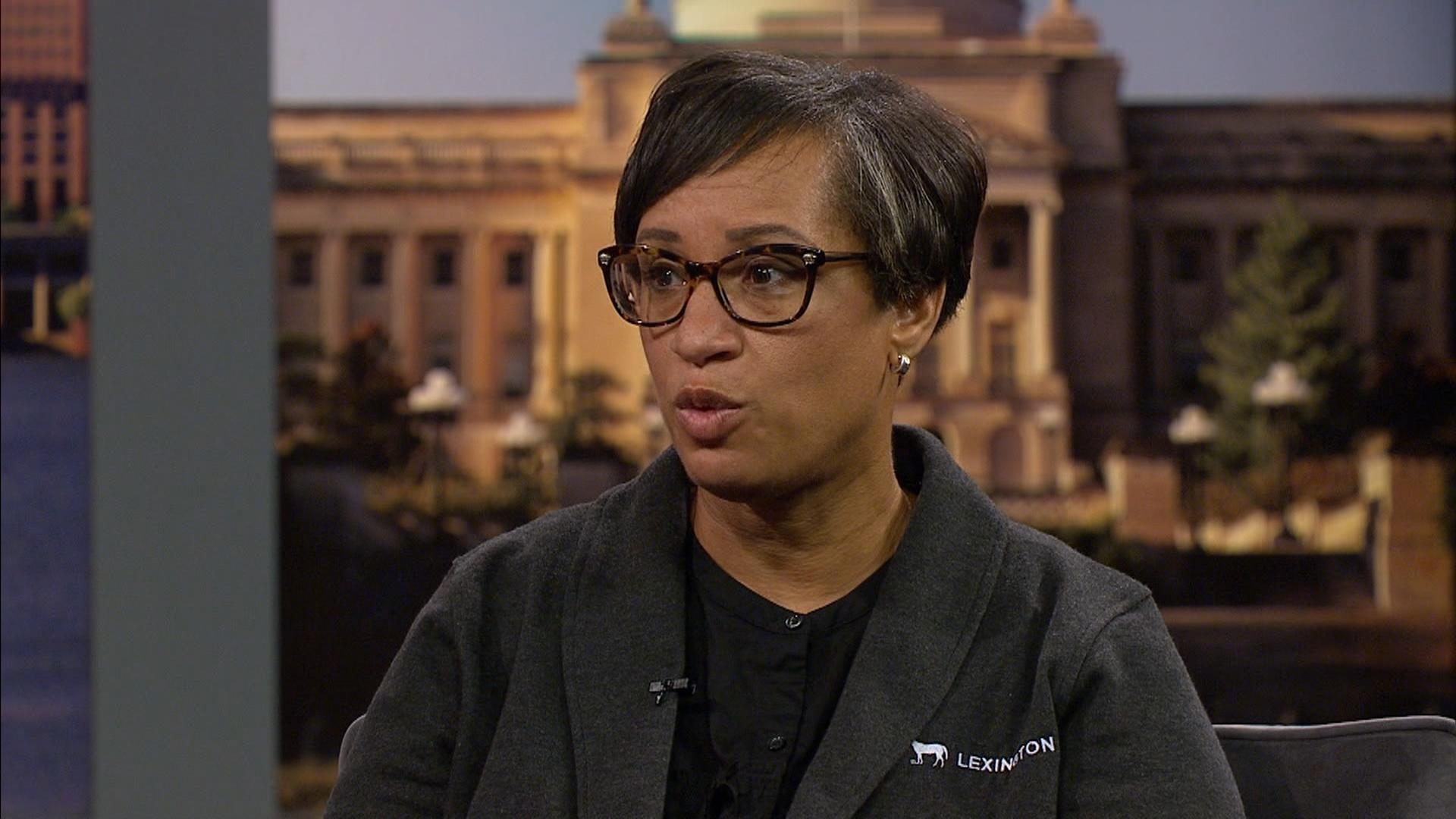
Walsh appeared on KET’s Connections to talk about the grant and the origins of the opioid crisis. The program also featured Andrea James, community response strategist for Lexington Mayor Linda Gorton. She is organizing a multidisciplinary working group that will study ways to reduce drug addiction in Fayette County.
The Rise of Painkillers Upends Health Care
Traditionally doctors were taught to always check a patient’s four vital signs: pulse, blood pressure, respiration rate, and body temperature. But in the late 1990s and early 2000s, doctors were encouraged to check a fifth indicator: a patient’s level of pain.
“What we didn’t know at the time that was being pushed onto physician and hospital associations is that [fifth indicator] was actually being backed by the pharmaceutical industry,” says Walsh. “They had their own motivation.”
That was about the time powerful new opioid-based painkillers like OxyContin arrived on the market. Drug makers told doctors the medicines were non-addictive, and promised patients they could live pain free. Walsh says that turned the health care system “topsy-turvy:” Instead of considering a variety of pain management options, many doctors simply prescribed opioids to eliminate patient pain. They embraced the quick and easy solution that made patients happy, even if it wasn’t the best long-term medical solution.
“There’s this expectation sometimes that people have that they’re going to have no pain,” says Walsh. “It’s inevitable that you are going to have pain if somebody is doing something really invasive like surgery.”
Instead of reserving opioids for people with acute post-operative pain or those with terminal cancer, Walsh says doctors began prescribing the medicines for a variety of conditions like arthritis, dental work, and back pain. That led to over-prescribing, which she says put those patients at risk of addiction.
“The fallout of that was that we created a whole population of people who became physically dependent on opioids, many of them unwittingly,” says Walsh.
“We don’t want to withhold legitimate treatment for people who need it,” she continues. “The fact remains that opioids are still some of the best pain relievers that we have, but because of the overprescribing and overselling of opioids, we’ve been handing them out for a lot of conditions that we don’t actually know that they are effective for.”
The practice of overprescribing also put more pills on the streets, which Walsh says helped fuel the illicit drug trade. As public awareness about the opioid crisis increased, and lawmakers and medical advocates pushed limits on opioid prescriptions, street dealers sought out alternatives. Walsh says that led to the rise of heroin, which she says is cheaper and readily available, and eventually more powerful and more dangerous drugs like fentanyl, which is 50 to 100 times more potent than morphine.
As a result, addiction rates across the nation have soared, as have the number of overdoses. The National Center for Health Statistics estimates there were more than 68,000 overdose deaths in 2018 alone.
A Return to Evidence-Based Care
The University of Kentucky was one of four institutions nationwide selected for the ambitious overdose reduction project. Walsh says researchers will target 67 communities across four states for the effort.
“What we plan to do is bring a whole set of integrated evidence-based practices into each community, using good community engagement principles,” she says. “So we’re making certain that everybody who really needs care can get good care that’s evidence-based.”
The $87 million grant to UK is by far the largest such award in the school’s history. Walsh and her colleagues will focus on 16 central and eastern Kentucky counties: Bourbon, Boyd, Boyle, Campbell, Carter, Clark, Fayette, Floyd, Franklin, Greenup, Jefferson, Jessamine, Kenton, Knox, Madison, and Mason.
“The defining criteria for how to select counties was really based on the extent of the crisis as measured by opioid overdose death rates in each of those counties over the last couple of years,” says Walsh.
The 40 percent reduction goal is ambitious, but Walsh says there have been instances of similar overdose decreases within specific small communities. Researchers will explore how factors like expanding treatment options and improving overdose response protocols can be implemented or scaled-up to reduce death rates on a broader scale.
The study will also look at how health care providers prescribe opioids for pain relief and handle substance use disorders among patients.
“We have very little curricula in medical schools and nursing schools around addiction in general,” she says. “It really should be mandatory curricula for everyone.”
But it’s not just medical students who need that training. Walsh says veteran practitioners also need to adopt new approaches to pain management.
“Training is one thing, changing behavior is another thing,” she says. “You can offer educational modules but if someone’s been doing the same thing the same way for 30 years, sometimes they’re a little resistant to change. They might need a little more encouragement.”
Lexington Group to Have ‘Tough’ Conversations About Drugs
Although the opioid crisis is often associated with rural communities of Appalachia, the problem has also impacted urban areas of Kentucky’s “golden triangle.” Jefferson, Fayette, and Kenton Counties lead the state in the number of residents who have died from heroin- and fentanyl-related overdoses, according to the Kentucky Office of Drug Control Policy.
Lexington Mayor Linda Gorton has made addressing the drug epidemic a top priority of her new administration. Just days after taking office in January, she announced the formation of a working group that will develop a comprehensive response for the community. Gorton selected former city councilwoman Andrea James to organize the group and develop the action plan.
“The mayor thought it was important to have a strategy that engaged prevention, treatment, and recovery,” says James. “We’re ready to forge forward and make a sustainable plan to help us decrease deaths.”
The working group, which James is formalizing this month, will include representatives from health care and research, treatment and recovery, faith and business leaders, and law enforcement.
“We’re looking for some worker bees,” says James. “We’re looking for people willing to come in [and] have honest, tough, awkward conversations about what’s happening in the world of response to substance use here in Kentucky.”
Although the crisis started with prescription opioids, James says she wants the working group to address the new threats posed by methamphetamine, heroin, and fentanyl.
“Fentanyl is everything at this point,” she says. “I heard someone say recently that you can’t find heroin without fentanyl in it at this point in Kentucky… Just the threat of that alone should be enough to scare some people into talking about the issue.”
In addition to putting more resources into prevention and recovery, James also hopes to help reduce the stigma that surrounds substance use disorders. That includes fostering education and dialogue in the city’s minority communities.
“People of color are less likely to use opioids, [but] they’re more likely to die of opioid overdose because the resources aren’t there in the communities where they are to talk about what do you do in the case of an overdose,” says James. “We’re not having those conversations in the black community necessarily in Kentucky yet. We’re trying.”