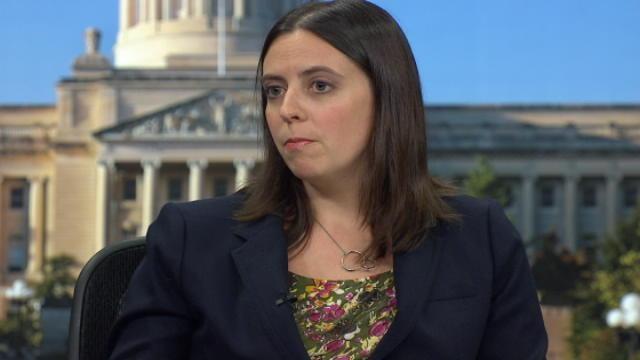


As the U.S. Senate race headed into the long Labor Day weekend, Sen. Mitch McConnell faced two stories that may have ramifications for his reelection bid. The panel on this weekend’s Comment on Kentucky discussed those reports and how they may play out with voters.
McConnell’s campaign manager Jessie Benton resigned late Friday amid a continuing investigation over illegal payments made during the 2012 election cycle when Benton served as political director for Rep. Ron Paul’s presidential campaign. An associate of Benton’s is accused of paying an Iowa state senator $73,000 to switch his support from Minnesota Rep. Michele Bachmann to Paul.
According to news reports, Benton’s name is referenced in a Federal Election Commission complaint on the matter, but he is not accused of any wrong-doing. Benton says talk tying him to the payments are untrue and politically motivated.
Jack Brammer of the Lexington Herald-Leader, the newspaper that broke the story, says Benton resigned as McConnell’s campaign manager so as not to become a distraction to the senator’s reelection bid. McConnell accepted Benton’s resignation, which became effective on Saturday.
Brammer says the campaign of Democratic challenger Alison Lundergan Grimes issued a statement saying McConnell owes Kentuckians a full accounting of what he knew about the Benton matter and when he knew it.
Both Brammer and the Louisville Courier-Journal’s Joe Gerth don’t see any significant impact on the McConnell campaign. Gerth says former McConnell chief of staff Josh Holmes is expected to replace Benton.
Gerth also says the investigation could be more problematic for Sen. Rand Paul. Benton ran Paul’s 2010 Senate race, and he was expected to play a significant role in Paul’s potential presidential bid in 2016.
McConnell Audio Recording
Also last week, The Nation posted on its website an audio recording of McConnell speaking to a June summit of wealthy political donors sponsored by industrialists Charles and David Koch. The tape included pledges that, as Senate Majority Leader, McConnell would prevent debate on issues like raising the minimum wage and extending unemployment benefits. The recording also has McConnell saying that the worst day of his life was when President George W. Bush signed the McCain–Feingold Act into law.
Joe Gerth says some activists on the left are already describing the recording as McConnell’s 47 percent moment. That refers to a secret recording made of 2012 Republican presidential nominee Mitt Romney in which he said the 47 percent of Americans on government support would vote for President Obama no matter what.
Bill Bryant of WKYT-TV notes that Romney is scheduled to campaign for McConnell in Lexington next month.
Questions Linger about Grimes Campaign Bus
After Republicans filed a complaint about a campaign bus Alison Lundergan Grimes rented from her father’s company, additional questions have surfaced over the legality of that bus to carry passengers. Joe Gerth says his investigations have found no state or federal permit to license the vehicle to transport people.
The Grimes campaign rents the bus from the Lundergan Group, which is owned by Grimes’ father Jerry Lundergan. Reports surfaced two weeks ago that the campaign may be paying less than market rates to rent the bus, which would, in effect, be an illegal campaign contribution.
Jack Brammer says the Grimes camp believes it already had the right to carry passengers on the bus, but the campaign did apply for a state charter permit late last week just to be sure.
Factors Behind Coal’s Decline
The specter of coal looms large over the U.S. Senate race and 2015 Kentucky governor’s race. As much as some candidates want to blame the Obama Administration for coal job losses, especially in eastern Kentucky, Erica Peterson of WFPL-FM in Louisville says production and employment has been on the decline for some 30 years. She cites a number of factors including technology that allows coal to be mined by fewer people, less easily available coal reserves, the rise of cheaper natural gas, and environmental policies to regulate mining and burning coal.
While eastern Kentucky used to lead the state’s western coalfields in production, Peterson says the two regions are now comparable in the amount of coal mined. She says thicker coal seams in eastern Kentucky have largely been mined out, which forces companies to seek less accessible seams of coal buried under more dirt and rock. She says at the industry’s peak in 1997, an eastern Kentucky miner could produce 3.83 tons of coal per hour. Now that rate is down to 2.1 tons an hour.
The future of mining in the state’s Appalachian counties is already an issue in next year’s race for governor. Louisville businessman Hal Heiner has criticized comments made by Kentucky Agriculture Commissioner and fellow Republican candidate James Comer, who said the region needs to look beyond coal to develop a new economy. Heiner claims that means Comer is against coal.
To boost his credibility with the industry, several high-profile coal officials will accompany Comer when he officially announces his candidacy next week, according to Jack Brammer.
–The opinions expressed on Comment on Kentucky and in this program synopsis are the responsibility of the participants and do not necessarily reflect those of KET.