
What’s in a name? Sometimes, it’s everything.
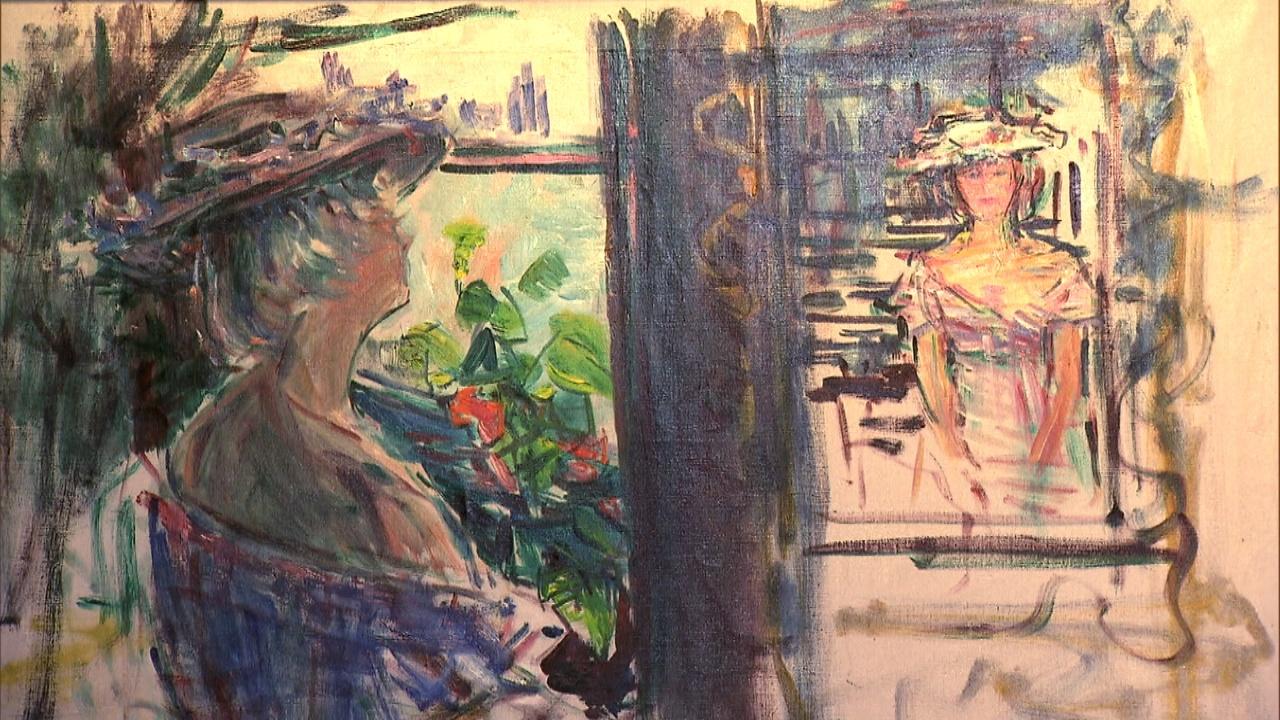
Berea College is home to a valuable collection of art by the internationally renowned painter Dimitrie Berea. The Romanian-born artist had no prior link to the small liberal arts college in Madison County. So how did the Dimitrie Berea Gallery come to be?
For that, the college can thank Dimitrie’s widow, Princess Alice Gurielli Berea Terres. After his death in 1975, many museums wanted to house Berea’s works, and the princess prayed for a sign on which museum it should be. Her answer came when she saw a New York Times article about Kentucky that included information about Berea College.
The princess believed it was meant to be, and offered the collection of about 200 artworks to the small Kentucky college.
“When Princess Alice promised the collection to Berea College, the critical issue was where do we put it,” said Robert Boyce, retired art professor at Berea College.
Meghan C. Doherty, director of Berea’s Doris Ulmann Galleries, said the college had only 800 square feet of space, which was already full. “The sheer size of the gift meant that there wasn’t space in our existing building to house it,” she said.
An architect was found to design not only a new gallery, but a 1,200-square-foot, climate controlled, secure storage space. In 2002, work began to construct the building that houses the Dimitrie Berea Gallery.
Berea College already had a varied collection of art, thanks to a grant from the Kress Foundation years ago that brought the college 13 Italian Renaissance paintings.
Dimitrie Berea, who painted in the post-Impressionist style, was known for his landscapes as well as his portraits of European nobility, film stars, and socialites. He became a French citizen in 1950, and later moved to the United States.
Berea was Princess Alice’s fourth husband. Princess Alice, a Romanian native as well, was born to great wealth. Her father was a prince, and her grandfather was the king of Georgia, but she lost everything in the Communist revolution.
“She was in prison for three years,” Boyce said. “She was able to flee, and she fled to Austria where the nuns taught her French.” She went to Paris, and then New York City, where she became involved with the exiled Romanian community there.
“When she met Dimitrie Berea she was driving a taxi in New York,” Doherty said.
They were married in 1972; Jackie Kennedy Onassis was a witness to the ceremony, Boyce said. They were married three years before Berea died of colon cancer. His remains were interred in Paris, France.
The Dimitri Berea collection here in Berea includes oil paintings, drawings, prints, and watercolors.
Doherty says the collection allows Berea College to teach students about artists in exile. “A lot of the pieces in our collection by him were made while he was living outside of Romania,” she said.
Boyce says that Berea was a free thinker. “His art was not propagandistic,” he said. “It was happy and not so heavy and content laden as Communist works were.”
Berea College also houses a collection of artifacts from the lives of Dimitrie and Alice in the Romanian Room.