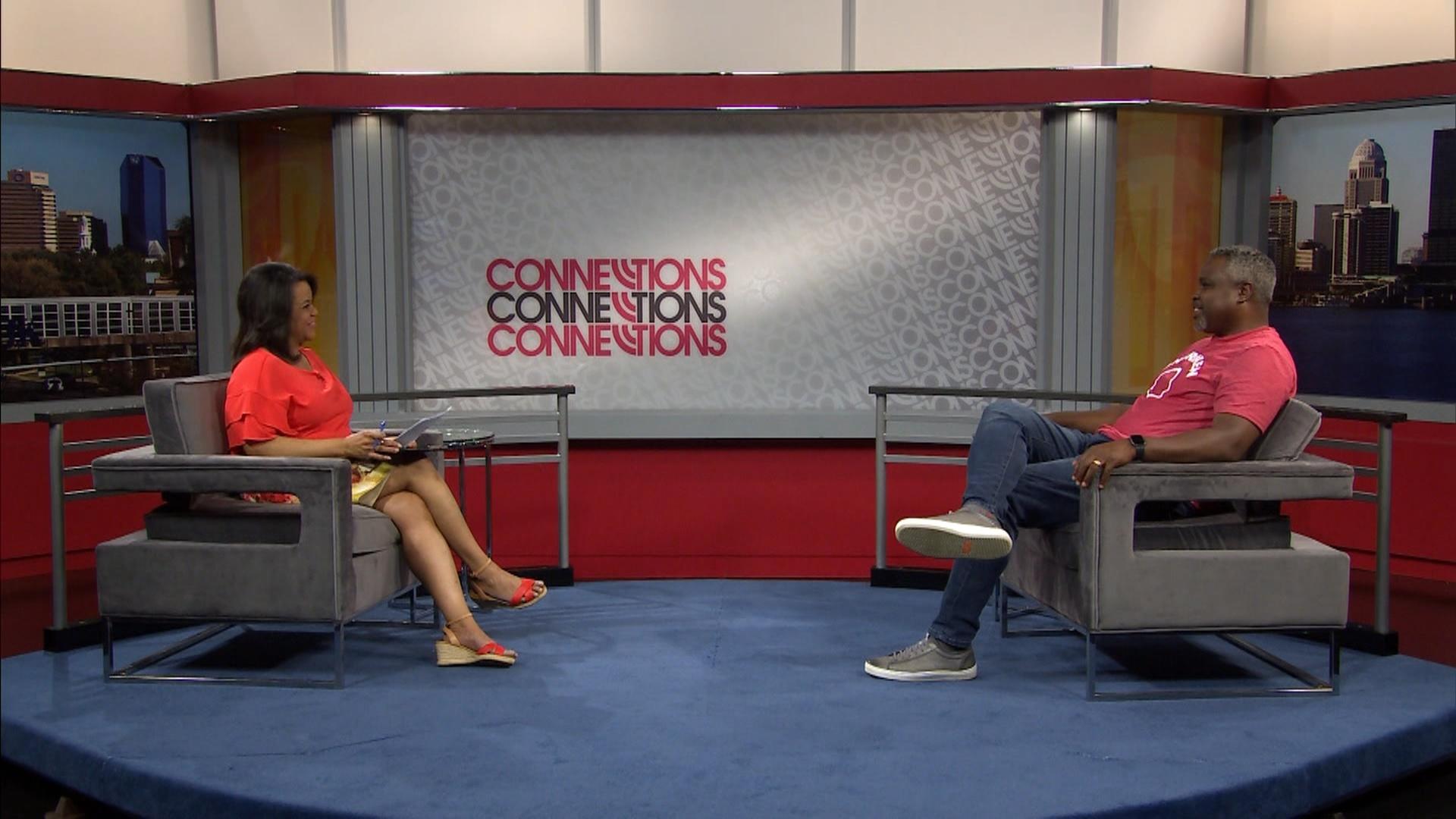


A father who is present, supportive, and affectionate can give tremendous positive benefits to his children. But a dad who is emotionally or physically absent can also have dramatic impacts in very negative ways. According to David Cozart, director of Lexington Leadership Foundation’s Fatherhood Initiative, children raised without an engaged father have a higher likelihood of living in poverty, suffering from behavioral or emotional issues, and using or selling drugs.
For 20 years, Cozart has worked through a variety of outreach programs to provide training and support to help fathers understand their responsibilities as parents, have healthy relationships with their families, and confront the trauma in their own lives that may hinder them from being a functional part of their families.
“The work is designed to increase father engagement and work directly with fathers in helping them overcome any barriers to them being the best father they can be and that we feel they really want to be,” says Cozart, who is the father of three children.
About 45 percent of the men served by the Fatherhood Initiative are Black, and Cozart says the majority of them are in jails and state prisons.
“That obviously speaks to the [racial] disproportionality in incarceration,” he says.
To reach those clients, Cozart says the Fatherhood initiative identifies and trains “people of faith and good will” to go into those facilities and conduct their programs.
“We deliver a research-based cognitive behavior curriculum and interface with them around fatherhood, responsible fatherhood, healthy relationships, coparenting, and things of that nature while they’re there in the jail so they can transition back home with more skills than they had,” he says.
In addition to improving the lives of those fathers and their families, Cozart says the men who complete their training are at lower risk of recidivism. He says it can also shift all-too-common narratives about Black men being absent fathers.
But it’s not just incarcerated men who can benefit from the Fatherhood Initiative. Cozart says even men in committed monogamous relationships can face barriers and challenges to parenting. That’s why he encourages all fathers to be as present with their children as they can.
““Your presence has to be a powerful, powerful element,” he says. “Be engaged. Whatever it takes, you owe it to your child and you owe it to yourself.”
In the coming months, Cozart hopes to spread these services across the state through his Commonwealth Center for Fathers and Families. He says that organization will work with a coalition of individuations and agencies to facilitate fatherhood programs, especially within the judicial, health care, and social service organizations. Cozart also wants to create regional Centers for Fathers and Families to bring this training into even more communities.
Helping Divorced Dads Become Better Fathers
For more than 20 years, Steve Adams devoted himself the climbing the corporate ladder in real estate, chasing bigger and bigger paychecks, working long hours and traveling frequently. But his financial success didn’t translate into a happy home life. and he eventually found himself the divorced father of two children.
Between the failure of his marriage and the death of his own father, Adams realized he needed to change.
“I didn’t want to be that father that watched my children grow up in pictures,” says Adams. “It just hit me one day that this is just not me.”
The lessons Adams learned on his journey to better fatherhood form the basis of his book, Now What? A Divorced Dad's Guide to Parenting Excellence, published in 2019 by Louisville’s Butler Books.
After his divorce, Adams thought he would be able to handle the responsibilities of joint custody of his children along with all of his corporate duties. He soon learned otherwise.
“You think you can juggle both. You can’t. It’s impossible,” Adams says. “You can’t do it at the same level.”
That realization informed a key piece of advice Adams shares in his book: The corporate money chase isn’t worth time away from your children.
“If you’re not spending time with them, something or someone is going to,” Adams wars. “They going to gravitate to that and you may not like how it turns out… You better pay attention to your kids and spend time with them.”
That commitment of his time and his full attention (no multi-tasking and no using the TV or smart phone as a babysitter) meant an overhaul of Adams’ schedule and a substantial reduction in business trips, dinners and happy hours. While it may not be easy to make those changes, he says it’s critically important.
“Consistency is the key,” says Adams. “You can’t send mixed signals and do it for a week or two and say this is just too much and go back to your old ways. It’s a lifestyle.”
Adams also advises divorced dads to make sure they tell their children how they feel about them, to lead by example, and to let go of old disagreements with their former spouse. He says a Jefferson County Family Court judge once told him that some divorcing couples develop so much animosity for each other that they forget to consider what’s best for their children.
“There’s a lot of bad things that happen to good people,” Adams says, “but those things have to be left in the past if you [want] to strategically map out a plan of how you can pull things back together be the father you want to be.”