Skip to Main Content

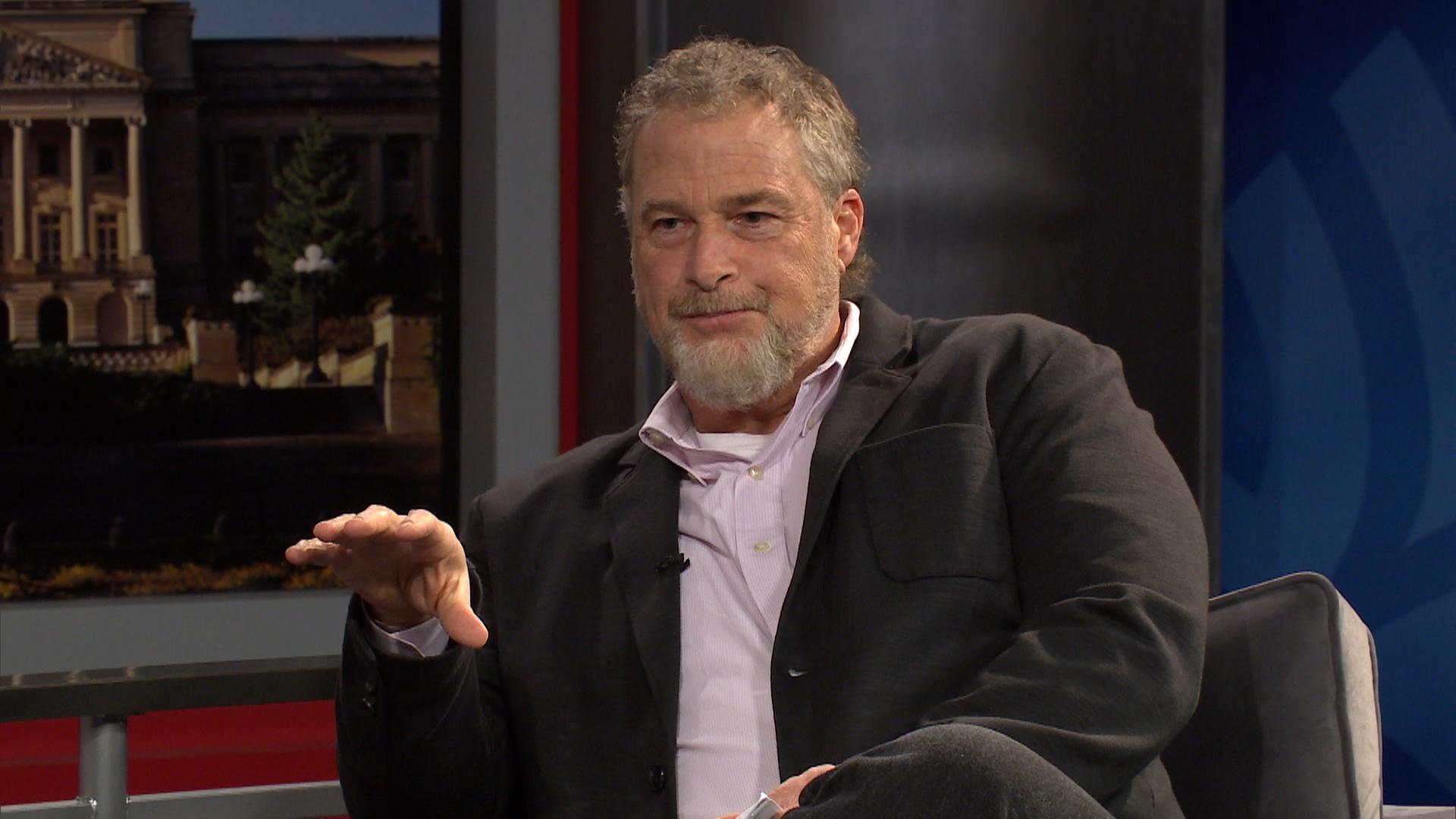
EKU Criminal Justice Professor Pete Kraska

Renee Shaw talks with Pete Kraska, Ph.D., an Eastern Kentucky University criminology professor, author and leading scholar on police militarization. Kraska discusses a new Kentucky law that limits the use of no-knock warrants and its impact on communities of color.
Season 16 Episode 23 Length 28:00 Premiere: 04/03/21

About

Connections

KET’s Connections features in-depth interviews with the influential, innovative and inspirational individuals who are shaping the path for Kentucky’s future.

From business leaders to entertainers to authors to celebrities, each week features an interesting and engaging guest covering a broad array of topics. Host Renee Shaw uses her extensive reporting experience to naturally blend casual conversation and hard-hitting questions to generate rich and full conversations about the issues impacting Kentucky and the world.


Tune-In

KET Sundays • 11:30 am/10:30 am
KET2 Sundays • 6/5 pm

Stream

Watch on KET’s website anytime or through the PBS Video App.

Podcast

The Connections podcast features each episode’s audio for listening.


Renee Shaw is the Director of Public Affairs and Moderator at KET, currently serving as host of KET’s weeknight public affairs program Kentucky Edition, the signature public policy discussion series Kentucky Tonight, the weekly interview series Connections, Election coverage and KET Forums.

Since 2001, Renee has been the producing force behind KET’s legislative coverage that has been recognized by the Kentucky Associated Press and the National Educational Telecommunications Association. Under her leadership, KET has expanded its portfolio of public affairs content to include a daily news and information program, Kentucky Supreme Court coverage, townhall-style forums, and multi-platform program initiatives around issues such as opioid addiction and youth mental health.  

Renee has also earned top awards from the Ohio Valley Chapter of the National Academy of Television Arts and Sciences (NATAS), with three regional Emmy awards. In 2023, she was inducted into the Silver Circle of the NATAS, one of the industry’s highest honors recognizing television professionals with distinguished service in broadcast journalism for 25 years or more.  

Already an inductee into the Kentucky Civil Rights Hall of Fame (2017), Renee expands her hall of fame status with induction into Western Kentucky University’s Hall of Distinguished Alumni in November of 2023.  

In February of 2023, Renee graced the front cover of Kentucky Living magazine with a centerfold story on her 25 years of service at KET and even longer commitment to public media journalism. 

In addition to honors from various educational, civic, and community organizations, Renee has earned top honors from the Associated Press and has twice been recognized by Mental Health America for her years-long dedication to examining issues of mental health and opioid addiction.  

In 2022, she was honored with Women Leading Kentucky’s Governor Martha Layne Collins Leadership Award recognizing her trailblazing path and inspiring dedication to elevating important issues across Kentucky.   

In 2018, she co-produced and moderated a 6-part series on youth mental health that was awarded first place in educational content by NETA, the National Educational Telecommunications Association. 

She has been honored by the AKA Beta Gamma Omega Chapter with a Coretta Scott King Spirit of Ivy Award; earned the state media award from the Kentucky Society of the Daughters of the American Revolution in 2019; named a Charles W. Anderson Laureate by the Kentucky Personnel Cabinet in 2019 honoring her significant contributions in addressing socio-economic issues; and was recognized as a “Kentucky Trailblazer” by the University of Kentucky Martin School of Public Policy and Administration during the Wendell H. Ford Lecture Series in 2019. That same year, Shaw was named by The Kentucky Gazette’s inaugural recognition of the 50 most notable women in Kentucky politics and government.  

Renee was bestowed the 2021 Berea College Service Award and was named “Unapologetic Woman of the Year” in 2021 by the Community Action Council.   

In 2015, she received the Green Dot Award for her coverage of domestic violence, sexual assault & human trafficking. In 2014, Renee was awarded the Anthony Lewis Media Award from the KY Department of Public Advocacy for her work on criminal justice reform. Two Kentucky governors, Republican Ernie Fletcher and Democrat Andy Beshear, have commissioned Renee as a Kentucky Colonel for noteworthy accomplishments and service to community, state, and nation.  

A former adjunct media writing professor at Georgetown College, Renee traveled to Cambodia in 2003 to help train emerging journalists on reporting on critical health issues as part of an exchange program at Western Kentucky University. And, she has enterprised stories for national media outlets, the PBS NewsHour and Public News Service.  

Shaw is a 2007 graduate of Leadership Kentucky, a board member of CASA of Lexington, and a longtime member of the Frankfort/Lexington Chapter of The Links Incorporated, an international, not-for-profit organization of women of color committed to volunteer service. She has served on the boards of the Kentucky Historical Society, Lexington Minority Business Expo, and the Board of Governors for the Ohio Valley Chapter of the National Academy of Television Arts and Sciences. 

Host Renee Shaw smiling in a green dress with a KET set behind her.

Exploring a Contentious Law Enforcement Practice Impacting Minority Communities

Imagine being roused from a deep sleep in the dead of night by the sound of unknown individuals breaking down your front door and storming into your home. Would you hide in terror, or find something with which to defend yourself? How would you feel to learn the intruders were police officers serving a warrant to search your home – a warrant that did not require them to knock first or identify themselves.

Those are the circumstances that led to the death of Breonna Taylor, a 26-year old Louisville EMT shot by Metro Police Department officers serving a no-knock warrant on her apartment after midnight on March 13, 2020. The warrant was part of a drug investigation into Taylor’s former boyfriend. Officers involved in the shooting say they identified themselves before entering; several neighbors say they heard no knock or announcement.

Because Taylor was Black and the officers involved in the shooting were white, the incident sparked public outrage and weeks of protests in Louisville and across the nation. The shooing also brought calls to end the practice of no-knock warrants.

Last June, the Louisville Metro Council unanimously voted to ban the warrants in Jefferson County. In the final hours of the 2021 General Assembly session, state lawmakers approved a measure to limit the use of no-knock warrants, require more of law enforcement entities that seek to use the warrants, and create penalties for officers failing to follow those rules.

“The law does some good things,” says Eastern Kentucky University School of Justice Studies Professor Peter Kraska. “It addresses the problem of no-knock warrants being issued inappropriately for low-level drug infractions. That has been a huge problem, historically.”

Under Senate Bill 4, police can secure no-knock warrants only for serious, life-threatening crimes. Those warrants can only be executed between 6 a.m. and 10 p.m., and officers serving them should be specially trained and equipped with body cameras or audio recording devices.

“It’s critical that the police have to check them, they have to turn them on, they have to make sure they’re working, [and] there’s multiple people that have them,” says Kraska. “If those protocols aren’t followed, there have to be consequences.”

If officers violate those procedures, Kraska says they won’t be able to use evidence collected during the execution of the warrant in court. SB 4 also requires officers to be clearly identifiable as law enforcement, and emergency medical personnel must be present on site to render aid if anyone is injured.

Kraska calls the bill a good first step, as long as lawmakers follow-up with additional legislation next year. But if this is the only action the legislature takes, then Kraska says they have fallen “seriously short.”

“Unfortunately for communities of color, it will end up making very little difference,” he says.

The Rise of No-Knock Warrants and Militarized Police

In the 1970s and early 1980s, no-knock warrants were a rarity according to Kraska, with only 1,000 to 2,000 being issued nationwide. But after tough-on-crime policies were enacted in succeeding decades, Kraska says their use skyrocketed. He says by 2010, around 60,000 no-knock warrants were issued nationwide, with some departments executing as many as 600 of them a year. Most of them, says Kraska, were connected to searches of private homes to investigate the possibility of a low-level drug-related offense such as marijuana possession.

To make matters worse, there has been a financial incentive to execute these warrants. Kraska says 85 percent of cash and property confiscated under no-knock warrants went to fund the police department tactical units who served the warrants; the remaining 15 percent went to prosecutors.

Opponents of no-knock warrants have questioned the practice even before Breonna Taylor’s death. Storming into a private residence is inherently dangerous for the occupants as well as the police officers. Then there are concerns about whom the warrants are most often used to investigate. A Courier-Journal analysis of no-knock warrants obtained between 2018 and 2020 by police in Louisville shows that 82 percent of suspects were Black.

Kraska says he thinks about half of the nation’s law enforcement community wants to see significant reforms to this type of policing. The other half, he says, is resistant to such changes.

“They gravitate towards militarization, they see communities that they’re policing in an aggressive and an adversarial way, they really revere the idea that they’re the thin blue line between order and anarchy,” he says. “That element in policing is really pushing back hard on any legislation that tries to reform the police.”

Another factor is the increased militarization of police over the past 30 to 40 years. Kraska says this trend has brought military-grade equipment into civilian communities and created a cadre of local law enforcement trained by retired military special operations personnel. He says that can be problematic.

“The police are supposed to be something very different than the military,” says Kraska. “They’re supposed to be protecting and serving people, not waging war.”

That creates a culture that Kraska says is damaging to communities and law enforcement. He says it can lead to police engaging in unnecessarily dangerous behavior, and civilians feeling open hostility for the officers they encounter.

Execution of Regular Warrants Also an Issue

Even if Kentucky joined Florida, Oregon, and Virginia in banning no-knock warrants, Kraska says that won’t necessarily solve the problem.

Police could still get a regular warrant that requires they knock, identify themselves, and wait a reasonable amount of time (usually 15 to 20 seconds) for the person to gather themselves and open the door. But Kraska says that doesn’t always happen.

“They knock, maybe. They announce, maybe, but they simultaneously breach that door,” says Kraska, “essentially conducting a no-knock raid but they don’t have a no-knock warrant…. That’s where the real problem lies.”

Kraska cites research by a colleague that found out of 73 drug-related knock-and-announce warrants secured by a major police department, all 73 were executed as no-knock raids.

State Rep. Attica Scott, a Democrat who represents downtown and West Louisville, proposed her own legislation during this year’s session that would have banned no-knocks and put more restrictions on regular warrants. That bill, which Kraska consulted on, stalled in committee.

As for SB 4, Kraska says it only addresses a small sliver of the policing problems that have adversely impacted communities of color for decades. He contends the problems of executing even regular warrants will not go away under that legislation.

“It will continue to happen until someone steps up and says, ‘This is not appropriate,’” says Kraska, “Some of the police community are saying this is not appropriate, but not enough of them.”

Sponsored by:

Season 16 Episodes

Filmmaker Elizabeth Helm-Frazier

S16 E37 Length 28:02 Premiere Date 08/01/21

Early Childhood Development Initiatives in Louisville

S16 E36 Length 28:01 Premiere Date 07/25/21

Kathy Werking and Jim Embry

S16 E35 Length 28:01 Premiere Date 07/17/21

Kentucky Public Health Commissioner Dr. Steven Stack

S16 E34 Length 27:41 Premiere Date 07/11/21

Boone Co. Judge Executive Gary Moore

S16 E33 Length 28:03 Premiere Date 06/26/21

The Demands and Rewards of Fatherhood

S16 E32 Length 26:31 Premiere Date 06/20/21

Psychologist Julie Cerel

S16 E31 Length 28:02 Premiere Date 06/13/21

Restaurateur and Chef Ouita Michel

S16 E30 Length 27:56 Premiere Date 06/06/21

Sarah Taylor Vanover - Early Childhood Education

S16 E29 Length 27:32 Premiere Date 05/16/21

A Conversation with U.S. Senator Mitch McConnell

S16 E28 Length 28:21 Premiere Date 05/09/21

Cynthia Knapek of Louisville Leadership Center

S16 E27 Length 27:35 Premiere Date 05/01/21

Vaccine Equity and Hesitancy

S16 E26 Length 28:22 Premiere Date 04/24/21

State Treasurer Allison Ball and Sharon Price

S16 E25 Length 28:31 Premiere Date 04/18/21

Chef and Activist Dan Wu

S16 E24 Length 27:52 Premiere Date 04/11/21

EKU Criminal Justice Professor Pete Kraska

S16 E23 Length 28:00 Premiere Date 04/03/21

The Rise of Anti-Asian Violence

S16 E22 Length 27:32 Premiere Date 03/28/21

Authors Prisha Hedau, Carly Muetterties and Maddie Shepard

S16 E21 Length 28:21 Premiere Date 03/21/21

Charles Booker

S16 E20 Length 28:27 Premiere Date 03/14/21

Mental Health and COVID-19

S16 E19 Length 28:39 Premiere Date 02/14/21

Community Activist Christopher 2X

S16 E18 Length 28:02 Premiere Date 02/07/21

Department of Veterans Affairs Commissioner Keith Jackson

S16 E17 Length 28:02 Premiere Date 01/31/21

A Mission to End Institutional Racism in Kentucky

S16 E16 Length 28:02 Premiere Date 01/24/21

Celebrating the Urban League of Lexington-Fayette County

S16 E15 Length 28:33 Premiere Date 01/17/21

Kentucky Lt. Gov. Jacqueline Coleman

S16 E14 Length 27:06 Premiere Date 01/10/21

Caroline Randall Williams

S16 E13 Length 28:01 Premiere Date 12/20/20

Amy Luttrell and Adria Johnson

S16 E12 Length 28:12 Premiere Date 12/13/20

Kentucky Education Commissioner Jason Glass

S16 E11 Length 28:01 Premiere Date 11/22/20

Louisville Metro Police Interim Chief Yvette Gentry

S16 E10 Length 28:11 Premiere Date 11/15/20

Jecorey Arthur and Quintez Brown

S16 E9 Length 27:31 Premiere Date 11/08/20

Terrance Sullivan

S16 E8 Length 28:01 Premiere Date 11/01/20

2020 Election Preview with Colmon Elridge and Tres Watson

S16 E7 Length 28:02 Premiere Date 10/25/20

Beth Howard and Michael Harrington; Devine Carama

S16 E6 Length 28:01 Premiere Date 10/18/20

Nana Ama Aya Bullock and Muriel Harris

S16 E5 Length 28:26 Premiere Date 10/11/20

Betsy Johnson, Saundra Ardrey

S16 E4 Length 28:41 Premiere Date 10/04/20

Fabian Alvarez, Leyda Becker and Mercedes Harn

S16 E3 Length 28:06 Premiere Date 09/27/20

Devine Carama; Marjorie Guyon and Barry Darnell Burton

S16 E2 Length 28:46 Premiere Date 09/20/20

Marsha Weinstein

S16 E1 Length 28:01 Premiere Date 09/11/20

See All Episodes

caret down

TV Schedules

Upcoming

No upcoming airdates

Recent

No recent airdates

Explore KET