Skip to Main Content

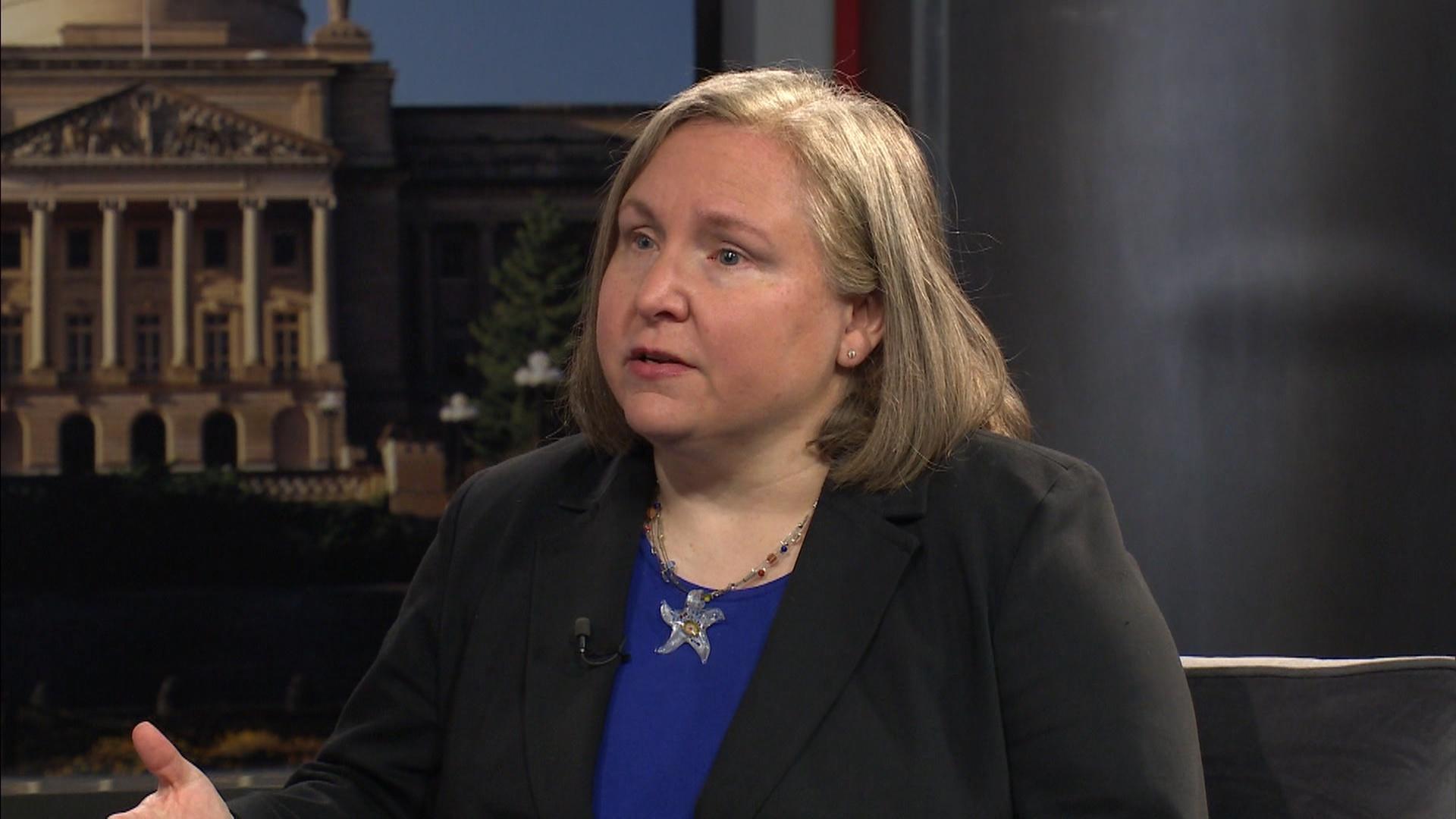
Psychologist Julie Cerel

Renee Shaw and psychologist Julie Cerel, Ph.D., a professor in the University of Kentucky College of Social Work, discuss grief and mental health challenges from the COVID-19 pandemic.
Season 16 Episode 31 Length 28:02 Premiere: 06/13/21

About

Connections

KET’s Connections features in-depth interviews with the influential, innovative and inspirational individuals who are shaping the path for Kentucky’s future.

From business leaders to entertainers to authors to celebrities, each week features an interesting and engaging guest covering a broad array of topics. Host Renee Shaw uses her extensive reporting experience to naturally blend casual conversation and hard-hitting questions to generate rich and full conversations about the issues impacting Kentucky and the world.


Tune-In

KET Sundays • 11:30 am/10:30 am
KET2 Sundays • 6/5 pm

Stream

Watch on KET’s website anytime or through the PBS Video App.

Podcast

The Connections podcast features each episode’s audio for listening.


Renee Shaw is the Director of Public Affairs and Moderator at KET, currently serving as host of KET’s weeknight public affairs program Kentucky Edition, the signature public policy discussion series Kentucky Tonight, the weekly interview series Connections, Election coverage and KET Forums.

Since 2001, Renee has been the producing force behind KET’s legislative coverage that has been recognized by the Kentucky Associated Press and the National Educational Telecommunications Association. Under her leadership, KET has expanded its portfolio of public affairs content to include a daily news and information program, Kentucky Supreme Court coverage, townhall-style forums, and multi-platform program initiatives around issues such as opioid addiction and youth mental health.  

Renee has also earned top awards from the Ohio Valley Chapter of the National Academy of Television Arts and Sciences (NATAS), with three regional Emmy awards. In 2023, she was inducted into the Silver Circle of the NATAS, one of the industry’s highest honors recognizing television professionals with distinguished service in broadcast journalism for 25 years or more.  

Already an inductee into the Kentucky Civil Rights Hall of Fame (2017), Renee expands her hall of fame status with induction into Western Kentucky University’s Hall of Distinguished Alumni in November of 2023.  

In February of 2023, Renee graced the front cover of Kentucky Living magazine with a centerfold story on her 25 years of service at KET and even longer commitment to public media journalism. 

In addition to honors from various educational, civic, and community organizations, Renee has earned top honors from the Associated Press and has twice been recognized by Mental Health America for her years-long dedication to examining issues of mental health and opioid addiction.  

In 2022, she was honored with Women Leading Kentucky’s Governor Martha Layne Collins Leadership Award recognizing her trailblazing path and inspiring dedication to elevating important issues across Kentucky.   

In 2018, she co-produced and moderated a 6-part series on youth mental health that was awarded first place in educational content by NETA, the National Educational Telecommunications Association. 

She has been honored by the AKA Beta Gamma Omega Chapter with a Coretta Scott King Spirit of Ivy Award; earned the state media award from the Kentucky Society of the Daughters of the American Revolution in 2019; named a Charles W. Anderson Laureate by the Kentucky Personnel Cabinet in 2019 honoring her significant contributions in addressing socio-economic issues; and was recognized as a “Kentucky Trailblazer” by the University of Kentucky Martin School of Public Policy and Administration during the Wendell H. Ford Lecture Series in 2019. That same year, Shaw was named by The Kentucky Gazette’s inaugural recognition of the 50 most notable women in Kentucky politics and government.  

Renee was bestowed the 2021 Berea College Service Award and was named “Unapologetic Woman of the Year” in 2021 by the Community Action Council.   

In 2015, she received the Green Dot Award for her coverage of domestic violence, sexual assault & human trafficking. In 2014, Renee was awarded the Anthony Lewis Media Award from the KY Department of Public Advocacy for her work on criminal justice reform. Two Kentucky governors, Republican Ernie Fletcher and Democrat Andy Beshear, have commissioned Renee as a Kentucky Colonel for noteworthy accomplishments and service to community, state, and nation.  

A former adjunct media writing professor at Georgetown College, Renee traveled to Cambodia in 2003 to help train emerging journalists on reporting on critical health issues as part of an exchange program at Western Kentucky University. And, she has enterprised stories for national media outlets, the PBS NewsHour and Public News Service.  

Shaw is a 2007 graduate of Leadership Kentucky, a board member of CASA of Lexington, and a longtime member of the Frankfort/Lexington Chapter of The Links Incorporated, an international, not-for-profit organization of women of color committed to volunteer service. She has served on the boards of the Kentucky Historical Society, Lexington Minority Business Expo, and the Board of Governors for the Ohio Valley Chapter of the National Academy of Television Arts and Sciences. 

Host Renee Shaw smiling in a green dress with a KET set behind her.

Strategies for Improving Mental Health After a Rough Pandemic Year

With COVID-19 case numbers declining, and most pandemic restrictions ending, a sense of normal life has returned for many Americans.

But many people are faced with adapting to a new normal that includes mourning the loss of a loved one who died from COVID, finding a new job to replace one that was lost, resurrecting a business that was shuttered by the lockdown, or simply returning to work, school or church after a lengthy quarantine.

These emotional and psychological impacts can touch people in a variety of ways. Whether it’s grief, depression, traumatic stress, or anxiety, mental health professionals say you are not alone. Psychologist Julie Cerel, who is a professor in the University of Kentucky College of Social Work, encourages people who are struggling to reach out for help.

“Oftentimes if you’re having a bad day, or you’re struggling with going back to the office, putting on real clothes, your colleagues are too,” she says. “I think that kind of honesty and support is much better than just brushing it under the rug and saying it’s business as usual.”

Grieving Those Lost to COVID

Nearly half a million people in the commonwealth have tested positive for COVID since the start of the pandemic, and more than 7,100 Kentuckians lost their lives from the virus. Because of safety protocols that closed hospitals to visitors, many of those patients died alone, which Cerel says created a special kind of trauma for family and loved ones.

“People didn’t get their normal rituals that we associate with dying: Being with their loved ones, getting to hear their final words,” she says.

Additional limits on public gatherings meant that the usual traditions around visitations and funerals could not occur. Virtual services did help, but Cerel says after they concluded, people were still left to grieve in isolation.

“People who are grieving need their community,” she says, “they need to know that other people care about them and are there to support them.”

But Cerel says grief isn’t just about the loss of someone important to us. It can also include mourning what would have been – a job, a business, regular social gatherings, and other aspects of pre-pandemic existence that COVID took away.

For some people, grief can inspire positive action, Cerel says, such as fulfilling a lifelong dream that honors the person who was lost. But for others, grief can change their lives for the worse.
“Prolonged grief is when someone gets stuck in their grief in a way that they cannot shake the sadness, the yearning for the person [they lost], and the fact that they feel like they just can’t go on with their own life,” she says. “It lasts usually six months or longer.”

Fortunately, Cerel says there are specific treatments that can help people suffering with prolonged grief. She also says the pandemic demonstrated that telemedicine is an effective way for people to receive counseling and therapy, especially for patients who live in remote areas that may lack easy access to mental health professionals.

The Pandemic and Suicides

At the outset of the pandemic, when the nation went into lockdown, some politicians and pundits who opposed the closures argued they would result in a surge of suicides among isolated individuals.

“I think the mental health piece was used for alarmists as reasons – kind of a political pawn in some cases – for why we needed to open the economy,” Cerel says. “Suicide became a touchpoint – if we don’t do something, we’re going to lose thousands and thousands of people.”

But Cerel says that didn’t happen. She says some racial and ethnic groups did experience slight increases in suicide rates, but she notes the overall population saw a decrease in suicides.

“For now, people have really drawn together, looked out for each other, and we haven’t seen excess suicides,” says Cerel.

But that doesn’t mean suicide isn’t a significant problem. Cerel says the commonwealth loses two times the number of Kentuckians to suicide as it does to homicide. National research indicates that about half of Americans know of someone who died by suicide.

She’s also concerned about the sharp increase in firearms purchases made during the pandemic. She says that means more people have a readily available means for taking their own lives.

A new suicide hotline is scheduled to go in service next summer, according to Cerel. She says people anywhere in the United States will be able to dial 988 for immediate crisis assistance. She also says suicides are being more openly reported in obituaries and the language around suicide is changing. Now the preferred wording is to say someone “died by suicide” instead “committed suicide,” which Cerel says harkens back to the days when some legal statutes classified suicide as a crime, and some faiths considered it a sin.

“For those people left behind, having that reminder that their loved one committed a crime or committed a sin can then just be more stigmatizing and more harmful,” she says.

Mental Health Challenges for Students

Children faced their own mental health issues during the pandemic, from having their normal routines upended, to being isolated at home when schools closed, to being unable to see older relatives and losing loved ones. While there was not an increase in suicides among youth, Cerel says there was a spike in crisis visits involving young people when regular outpatient clinics and well as school-based counseling services were shuttered.

“Many people have come to rely on schools as the mental health clinic for our kids,” she says.

Cerel credits the many teachers and school psychologists who responded to their students’ mental health needs by connecting them virtually or by telephone to provide much-needed supports. While some pediatricians and government experts recommended schools reopen as soon as possible, Cerel says that a one-size-fits-all approach doesn’t consider those children whose academic performance actually improved during at-home instruction. That group includes students who were bullied at school, had difficulty focusing in certain environments, or may have experienced classroom anxiety.

“I think there really needs to be a much more nuanced look at what is it that kids need as they’re coming back, and more planning that looks at all those different levels of needs,” says Cerel.


Sponsored by:

Season 16 Episodes

Filmmaker Elizabeth Helm-Frazier

S16 E37 Length 28:02 Premiere Date 08/01/21

Early Childhood Development Initiatives in Louisville

S16 E36 Length 28:01 Premiere Date 07/25/21

Kathy Werking and Jim Embry

S16 E35 Length 28:01 Premiere Date 07/17/21

Kentucky Public Health Commissioner Dr. Steven Stack

S16 E34 Length 27:41 Premiere Date 07/11/21

Boone Co. Judge Executive Gary Moore

S16 E33 Length 28:03 Premiere Date 06/26/21

The Demands and Rewards of Fatherhood

S16 E32 Length 26:31 Premiere Date 06/20/21

Psychologist Julie Cerel

S16 E31 Length 28:02 Premiere Date 06/13/21

Restaurateur and Chef Ouita Michel

S16 E30 Length 27:56 Premiere Date 06/06/21

Sarah Taylor Vanover - Early Childhood Education

S16 E29 Length 27:32 Premiere Date 05/16/21

A Conversation with U.S. Senator Mitch McConnell

S16 E28 Length 28:21 Premiere Date 05/09/21

Cynthia Knapek of Louisville Leadership Center

S16 E27 Length 27:35 Premiere Date 05/01/21

Vaccine Equity and Hesitancy

S16 E26 Length 28:22 Premiere Date 04/24/21

State Treasurer Allison Ball and Sharon Price

S16 E25 Length 28:31 Premiere Date 04/18/21

Chef and Activist Dan Wu

S16 E24 Length 27:52 Premiere Date 04/11/21

EKU Criminal Justice Professor Pete Kraska

S16 E23 Length 28:00 Premiere Date 04/03/21

The Rise of Anti-Asian Violence

S16 E22 Length 27:32 Premiere Date 03/28/21

Authors Prisha Hedau, Carly Muetterties and Maddie Shepard

S16 E21 Length 28:21 Premiere Date 03/21/21

Charles Booker

S16 E20 Length 28:27 Premiere Date 03/14/21

Mental Health and COVID-19

S16 E19 Length 28:39 Premiere Date 02/14/21

Community Activist Christopher 2X

S16 E18 Length 28:02 Premiere Date 02/07/21

Department of Veterans Affairs Commissioner Keith Jackson

S16 E17 Length 28:02 Premiere Date 01/31/21

A Mission to End Institutional Racism in Kentucky

S16 E16 Length 28:02 Premiere Date 01/24/21

Celebrating the Urban League of Lexington-Fayette County

S16 E15 Length 28:33 Premiere Date 01/17/21

Kentucky Lt. Gov. Jacqueline Coleman

S16 E14 Length 27:06 Premiere Date 01/10/21

Caroline Randall Williams

S16 E13 Length 28:01 Premiere Date 12/20/20

Amy Luttrell and Adria Johnson

S16 E12 Length 28:12 Premiere Date 12/13/20

Kentucky Education Commissioner Jason Glass

S16 E11 Length 28:01 Premiere Date 11/22/20

Louisville Metro Police Interim Chief Yvette Gentry

S16 E10 Length 28:11 Premiere Date 11/15/20

Jecorey Arthur and Quintez Brown

S16 E9 Length 27:31 Premiere Date 11/08/20

Terrance Sullivan

S16 E8 Length 28:01 Premiere Date 11/01/20

2020 Election Preview with Colmon Elridge and Tres Watson

S16 E7 Length 28:02 Premiere Date 10/25/20

Beth Howard and Michael Harrington; Devine Carama

S16 E6 Length 28:01 Premiere Date 10/18/20

Nana Ama Aya Bullock and Muriel Harris

S16 E5 Length 28:26 Premiere Date 10/11/20

Betsy Johnson, Saundra Ardrey

S16 E4 Length 28:41 Premiere Date 10/04/20

Fabian Alvarez, Leyda Becker and Mercedes Harn

S16 E3 Length 28:06 Premiere Date 09/27/20

Devine Carama; Marjorie Guyon and Barry Darnell Burton

S16 E2 Length 28:46 Premiere Date 09/20/20

Marsha Weinstein

S16 E1 Length 28:01 Premiere Date 09/11/20

See All Episodes

caret down

TV Schedules

Upcoming

No upcoming airdates

Recent

No recent airdates

Explore KET