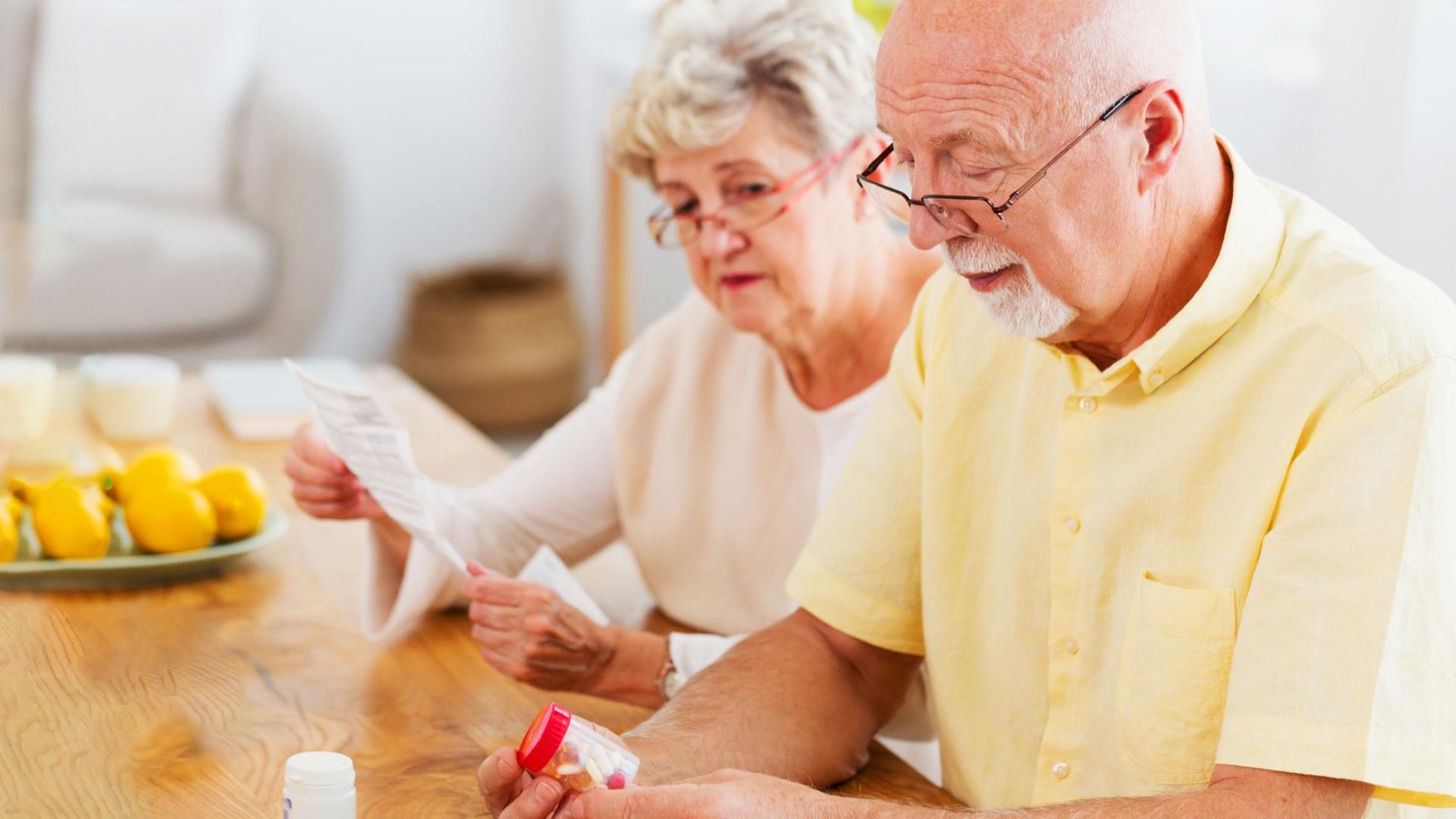
In this forum, host Dr. Wayne Tuckson and a panel of experts examine the benefits and risks of the multiple medications and supplements that seniors take to optimize health and manage chronic conditions. They also explore the importance of lifestyle and dietary modifications as we age.
Here are three takeaways from the forum:
- 1. Learning to manage medications is essential as we grow older, and it is the responsibility of both patient and provider.
According to a 2019 report from the U.S. Centers for Disease Control and Prevention, 70 percent of people ages 40 to 79 take at least one prescription medication a day, and around 22 percent take five or more per day. In the 60- to 79-year-old cohort, the report found that 80 percent took at least one prescription medication per day, and 35 percent took five or more.
This can create risks for serious problems from what’s called polypharmacy, which is the unwanted effects of a combination of five or more prescriptions or over-the-counter drugs within the body. Dr. Daniela Moga, a professor and assistant dean for research at the University of Kentucky College of Pharmacy, says the medications can add up for a single patient and result in unintended and harmful consequences.
Polypharmacy is common because more and more seniors are being treated for multiple chronic diseases, says Dr. Laura Morton, a geriatric physician at UofL Health and a professor of geriatric medicine at the University of Louisville School of Medicine. This is especially true in Kentucky, which has high rates of diabetes, heart disease and hypertension, and lung disease.
Patients that need treatment for more than one of these ailments can see their number of prescriptions rise significantly, requiring a collaborative approach to manage them, Morton says. This involves participation from the patient, his or her primary care physician (PCP), hospitals and clinics, and any specialists that provide treatment.
“The primary care physician is the main person who should be the captain of the ship, so to speak, and we always want that captain to be working with the patient,” Morton says. “The patient should be their own advocate, too, and they are the best partner with the PCP in this process. (The patient) needs to keep track of that medication list, take it between all the specialists, back to their PCP, or if they go to the hospital or nursing home.”
In addition, Dr. Angela Sandlin, pharmacy director at Baptist Health LaGrange, says that pharmacists need to provide their knowledge about medicine and expertise in gathering information to assist patients with multiple prescriptions. “We can do what we call a medication reconciliation,” she explains.
This reconciliation is used to identify when certain medications conflict with one another, creating harmful side effects. Sandlin says it can help patients know when to stop taking a particular drug that has a limited-use cycle and also to understand when they’re taking two drugs to treat a disease that end up being the same generic medication with different brand names.
Pharmacists should instruct patients to “tell all of your health care providers about all the medications you’re taking, and please consider over-the-counters and herbals as medicines,” says Sandlin. “Just because it’s herbal and from a natural source doesn’t mean that it can’t hurt you, because it can.”
Moga also emphasizes the need to document all vitamins and supplements taken by patients, and to research their effects. She says, “Some of these are not as regulated as prescription medications are, therefore it’s hard to tell what they contain. And we do have that advertisement that goes directly to the public that creates a false sense of safety.”
“As a geriatrician, we love for our patients to bring what we used to call a ‘brown bag’ into the office with their medications,” says Morton. “Sometimes it may be a brown bag, or it may need to be a suitcase depending how much, but bring in all of those prescription medications, the herbals, the vitamins, all of those supplements into the office.” Morton also recommends patients keep a typed list of medications accessible on their cellphones for medical staff to consult. She explains that this list can be used to compare against electronic medical records across providers, which can be incomplete or inaccurate.
Disease prevention should be a bedrock principle of any physician-patient relationship, regardless of the patient’s age, says Dr. Danesh Mazloomdoost, an anesthesiologist and regenerative specialist at Wellward Regenerative Medicine in Lexington. He feels that the current medical model in the U.S. is too reactive, resulting in high costs and poor outcomes.
“It’s easy to get into this routine where we are just chasing our tails trying to treat problems and cure problems – which is more of that short-term or acute-problem mindset – rather than looking at preventative approaches,” Mazloomdoost says. “I think what I focus on is just that (prevention): how do we preserve longevity and quality of life so that we don’t have to introduce polypharmacy.”
- 2. Recent breakthroughs in understanding what causes pain and how to manage it mean that seniors have many more options than before to get relief from acute and chronic pain.
While non-steroidal anti-inflammatory drugs such as ibuprofen and naproxen are proven to alleviate pain from arthritis and other conditions, they are not recommended for many seniors due to their effects when taken alone and, more importantly, their interactions with other medications, which can degrade kidney and heart function.
Fortunately, there are other options to help reduce and/or manage pain, including physical therapy. According to Rob Gentile, a therapist with KORT physical therapy, the primary goal for any medical provider attempting to treat pain is to identify and then address the root cause of that pain.
“Pain is a signal that something else needs to be taken care of,” he says, which could be an injury, wear and tear on a joint, or other issues. “Covering pain with a pain pill gets you to the signal, but it doesn’t necessarily get rid of the cause. As a physical therapist, my job is to dig a little deeper and (find out if) there is a mechanical cause that’s getting a signal to your brain that says something is wrong, and can I mitigate that signal by getting rid of the cause.”
For many of his patients with chronic joint pain, Gentile offers basic advice: “motion is lotion.” He encourages them to practice regular movement therapy to activate the cartilage and synovial fluid that supports joints, and says that with repetition their condition should improve. He is also a proponent of what he calls “inadvertent exercise,” or doing everyday tasks with an added layer of difficulty. For example, he instructs patients to park several spaces farther away than usual when going to the store so you will walk extra steps.
Opioids have been prescribed for pain for nearly 200 years, but their use greatly expanded near the end of the 20th century, which led to a surge in addiction resulting in millions of overdose deaths. The tide turned within the medical community in the 2010s, and now opioid prescriptions are declining.
“We are in large part using opioids wrong, because in large part a lot of our knowledge about opioids and pain management was really driven by pharmaceutical narratives,” Dr. Mazloomdoost says. “It overplayed the narratives and downplayed the risks. To me, the biggest concern with opioids is not necessarily addiction, it’s more the physiologic changes that happen when you use opioids for a prolonged period of time.”
According to Mazloomdoost, opioids are beneficial for short-term use in a perioperative timeframe (around surgery), for use in treating short-term acute pain, and also for people who have a terminal disease and have reached the end-stage of life. He says the risks of opioids outweigh the benefits in any other setting because they affect a wide range of physiological functions beyond pain reception in the nervous system, including heart rate, breathing, hormone regulation, and gastrointestinal motility.
When people use opioids regularly and for a prolonged period of time, Mazloomdoost explains, they often have to take other prescription medications to treat opioids’ side effects, bringing the dangers of polypharmacy back to the forefront.
“The problem with pain management is that we’ve taken this palliative mindset for acute issues and we’ve applied it to the chronic setting, and that doesn’t work” he says. “We really need to take a more comprehensive perspective to understand why it is that this (chronic) problem is not able to heal, why it is that this joint is becoming decayed… The role of what I call regenerative pain management is to understand the biomechanics of what is happening, using pain as the symptom, and then reverse-engineer the problem so you can slow down arthritis or even reverse arthritis.”
Morton says there are myriad approaches to treating pain, including acupuncture and massage therapy, that can be effective alternatives to opioids. “Really, it’s all about finding what works for that individual person,” she stresses. In some cases, simply increasing physical activity is all that’s needed. “There cannot be enough emphasis on (movement), getting up and being active. The more you move, the better you’re going to feel.”
- 3. A healthy and nutritious diet is important throughout life, but especially for older people who may have to adjust their eating and drinking habits for medical reasons and/or if they have a fixed budget.
“What we know about how nutrition affects human health is actually pretty basic and has been known to us for a while and is not likely to change,” says Dr. Karen McNees, a registered dietician with University of Kentucky Health and Wellness. These recommendations include eating minimally processed foods, cooking one’s own food, and focusing on high fiber and whole grains, fruits and vegetables, lean animal proteins, and heart-healthy fats.
“For older adults, one of the issues they may run into is that they have decreased energy, meaning they don’t need to consume as many calories,” McNees explains. “And the other issue is, especially for those 65 and older, they may notice a real decrease in their appetite.”
These changes due to aging mean that seniors should seek out foods with a high nutrient density – those that pack a lot of beneficial substances into a small package. “You need to make sure that food is working for you as best it can, and make sure that every bite counts,” McNees says, adding that in particular, some older adults might need to boost their protein intake in order to help maintain muscle strength.
McNees has several recommendations for seniors when they go grocery shopping. She says buying canned tuna, salmon, or chicken can help give older adults that desired protein boost while reducing preparation time. Similarly, she notes that buying frozen or canned fruits and vegetables instead of fresh ones usually does not reduce the nutritional value of these essential foods and often costs less. McNees also believes peanuts don’t get enough recognition as a heart-healthy fat option. She says peanuts are just as nutritious as more expensive nuts like almonds.
“I think that a lot of the health problems that folks have that are related to nutrition are more an issue of overconsumption than underconsumption,” McNees says. “We are not having these health problems because we’re having too few blueberries and too little kale. We’re having these problems largely because we’re consuming too many chips and too much candy and soda.”
Patients taking certain medications should consult with their primary care physician about foods to avoid, McNees says, such as grapefruit with statins, vitamin K in leafy greens with blood thinners, and high-fiber foods with some thyroid medications.