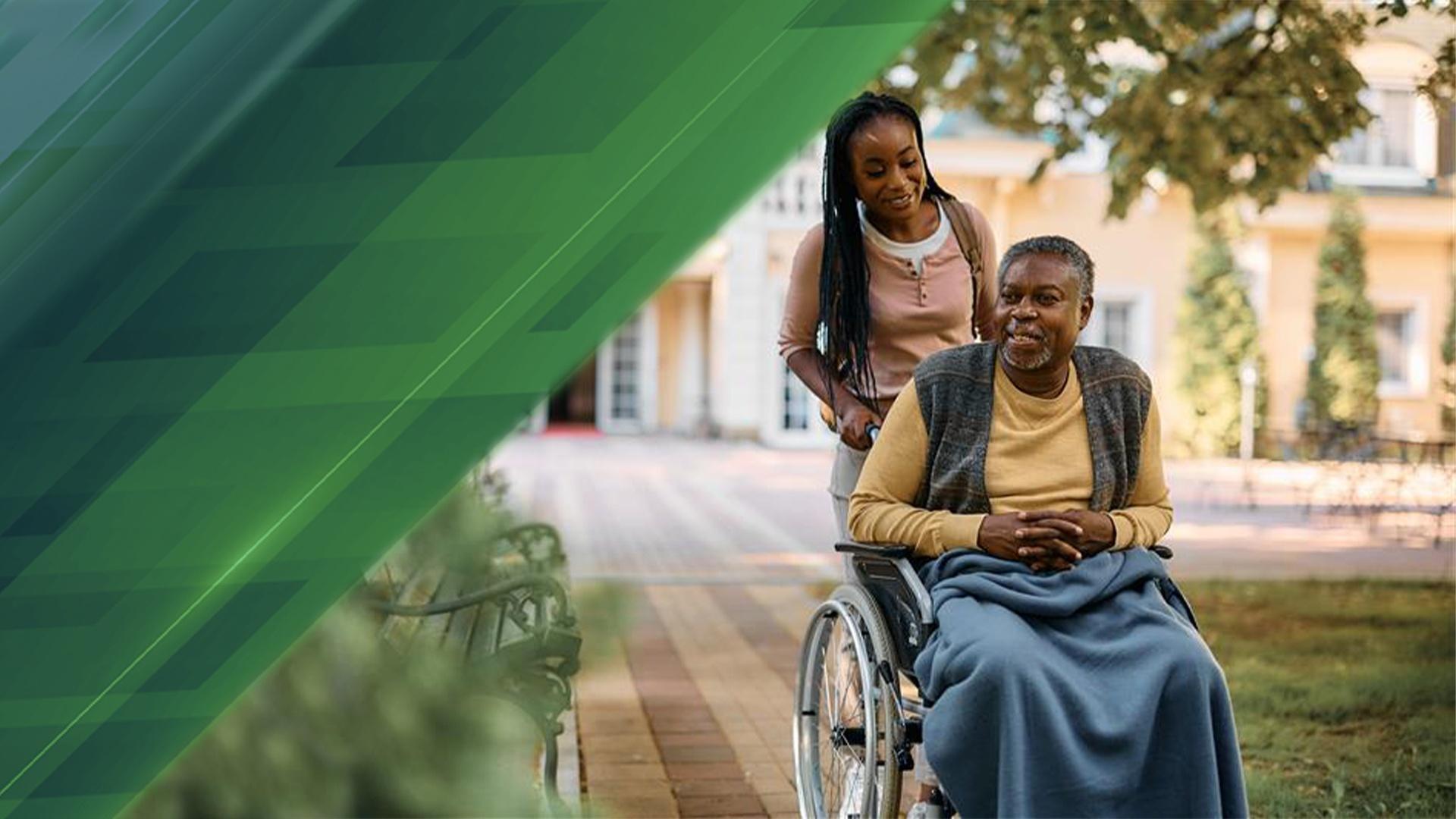
This program examines challenges to living independently as we age and covers resources that can help make that happen, including accessing medical care and fostering social connections. It explores housing options for seniors, how to make a home safe and accessible, and services offered by area aging agencies.
Here are three takeaways from the program:
- 1. It is important for older individuals and their families to discuss aging in place before health and mobility issues arise. Doing so can help individuals stay in their homes as long as possible.
According to a recent study by AARP, most older adults in the United States want to stay in their homes during their final years, but almost half believe they’ll have to move at some point in the future.
“For a lot of individuals, it’s really about wanting to age with dignity and be able to age in spaces that they’re comfortable in, spaces that they know, keeping that routine intact that’s important to them,” says Sam Cotton, assistant professor at the University of Louisville Trager Institute and Optimal Aging Clinic.
Cotton, an expert on caregiving, notes that remaining at home places high demands on both the individual being cared for and on those family members or others providing the care. This means that decisions about whether an older adult can still live at home require full participation from every involved party. Caregivers are often concerned with what Cotton calls “duty to care,” a commitment to ensure that the person cared for is safe and protected in their environment, while the older adult prioritizes the “dignity of risk.”
“What I mean by dignity of risk is their ability to make their own choices about how they want to get older and what that looks like for them,” Cotton says. “We struggle with that from the caregiver perspective because we want to make sure our loved ones are safe, whereas that individual, that older adult, might really want to prioritize having the choice to be able to do things more independently.”
When Cotton talks with caregivers, she encourages them to involve their loved ones in discussions about adapting their home environment so that both parties achieve their goals – safety and security along with independence. “Not just that ability to stay in the home, but to have that quality, meaningful life in their home and community,” she says.
To best reach a consensus and achieve that balance, experts recommend that older individuals and their family members or other prospective caregivers start discussions early about goals for aging in place, ideally while the person in question is in good health.
“Have the hard conversations,” says Kelly Parsons, a social worker with the University of Kentucky Sanders-Brown Center on Aging. “Your parent might resist, or your spouse might resist, or your children might resist having those conversations. But push through because it will be so much better if everybody’s on the same page and has the autonomy to make their own choices.”
“A lot of people exercise excess safety, which means we want to just wrap (our elders) in bubble wrap – here’s our grandmother, our parent, and we don’t want them to get hurt,” says Mary Crowley-Schmidt, a volunteer with AARP Kentucky and a retired worker at the Bluegrass Area Agency on Aging and Independent Living. “But we forget that they’re still a person and they still have the right to make their decisions as much as possible.”
- 2. Remaining in the home may require modifications to the dwelling to ensure safety and accessibility. But even if older adults are able to live in their homes, most of them will still require some level of care that is often provided by family members.
Margaret McCoskey, a volunteer with AARP Kentucky and a retired geriatric social worker, cared for her husband in their home after he became unable to care for himself. She was able to provide that in-home assistance nearly until the end of his life.
“It is difficult, very difficult,” McCoskey says. “Sometimes you have support from other family members, but sometimes you don’t.” McCoskey recalls that she had a hard time asking for help as her husband’s health worsened. “I strongly wanted to keep my husband at home for as long as I could, and I just about did, but it got to the point where I couldn’t, and fortunately we had done some remodeling after he was initially ill and the bathroom was one of the main areas. We need to look at how we assess our home if we want to stay in it.”
According to McCoskey, adults who desire to spend their entire lives at their longtime residence should think about making modifications when they’re still in their 50s. “There are some things that are simple like a raised toilet (seat) or handlebars, but in an older home, perhaps there’s not a walk-in shower,” she says, the latter being an expensive remodeling project. “You need to start investigating what these things would cost, and then start to assess among yourselves, or with adult children, or with a professional. Let them come in and say, ‘Where do we start?’ I think that is the key.”
In addition to raised toilet seats and handrails, some modifications that are relatively easy and affordable include changing doorknobs from rotating to levered to help reduce wrist strain, adding adhesives to all floormats to reduce tripping hazards, and adding motion-sensor lights to both indoor and outdoor areas, especially around steps.
Even if older adults are able to live relatively independently inside their home, they still might need help driving to appointments, the store, or social events.
“Social isolation has been proven to disrupt our brain health,” says Parsons. “It’s been proven to cause cognitive deficits because your brain isn’t working as much as it used to, particularly if you were around people.” With this in mind, it’s critical to encourage the individual to get out in society. Even doing something as simple as taking them grocery shopping instead of doing the shopping for them will help their socialization.
One relatively new concept for older adults in central Kentucky merges independence with regular socialization. The Golden Oaks co-living program is suitable for seniors who still can do most tasks independently but want housing that is more affordable and/or offers more social interaction. Dennis Anderson, owner of Anderson Communities, developed the idea after watching his mother move out of her house and spend down her savings at an independent living home.
Golden Oaks residents live four to a house that contains a community area plus apartment-style suites for each individual. The monthly cost is roughly one-third of the $3,500 average charge for an independent living facility.
“We build community,” says Anderson. “And the basis of community is human connection and social interaction.”
- 3. There are many resources available in Kentucky for seniors who want to live at home for as long as possible, even those who have chronic health conditions.
The best resource for information on aging in place in Kentucky is one of the state’s 15 Agencies for Aging and Independent Living. The AAAIL offices provide support to local senior centers, says Victoria Elridge, Commissioner of the Department for Aging and Independent Living at the state Cabinet for Health and Family Services. And there are 194 senior centers in Kentucky, at least one in every county.
“Especially in rural areas, they are the only hubs for older adults. They are the lifeline for supporting older adults as they age in place,” Elridge says. Senior centers are places where folks can get meals, access information, exercise, and participate in group activities fostering social bonds. One such center in Metcalfe County is operated by the Barren River AAAIL. In addition to opening its doors to the senior population, the center provides transportation and some home services such as meal delivery to elderly adults who have limited mobility and options to get out and interact in the community.
Seniors that require nursing home-level care but still want to live at home can benefit from Programs for All-Inclusive Care for the Elderly (PACE), which currently serve 50 counties in Kentucky. PACE programs are mainly covered by Medicaid and offer primary health care, social services, transportation, nutritional counseling, and social activities.
“PACE is a phenomenal program that supports the individual and asks them, ‘What do you need?’” says Elridge. “What we know is that when individuals age in place, they are empowered by choice in understanding what is most important to them and that they have the services and supports necessary to do that.”
Another helpful program serving seniors is the GUIDE model operated by Bluegrass Care Navigators through Medicare. GUIDE (Guiding an Improved Dementia Experience) currently serves counties in central and eastern Kentucky and offers person-centered dementia care with the nurse practitioner serving as the point of contact and referral guide to a variety of services. “Based on what tier your loved one is within the dementia process, and what stage of dementia, it (determines) what resources you get,” Parsons explains. Caregivers who have loved ones farther along in the disease are eligible to receive respite care, where a substitute takes the place of the unpaid caregiver for a period of time.
Those seeking a handy guide to resources can download a new edition of the Pathways guide, or what Mary Crowley-Schmidt calls the “aging Bible.”. ”It lists services on everything from how to get a senior’s fishing license to a home-delivered meal, to where to go to have fun,” says Crowley-Schmidt, who worked with the Bluegrass AAAIL for 38 years. “It’s just a wealth of information.”