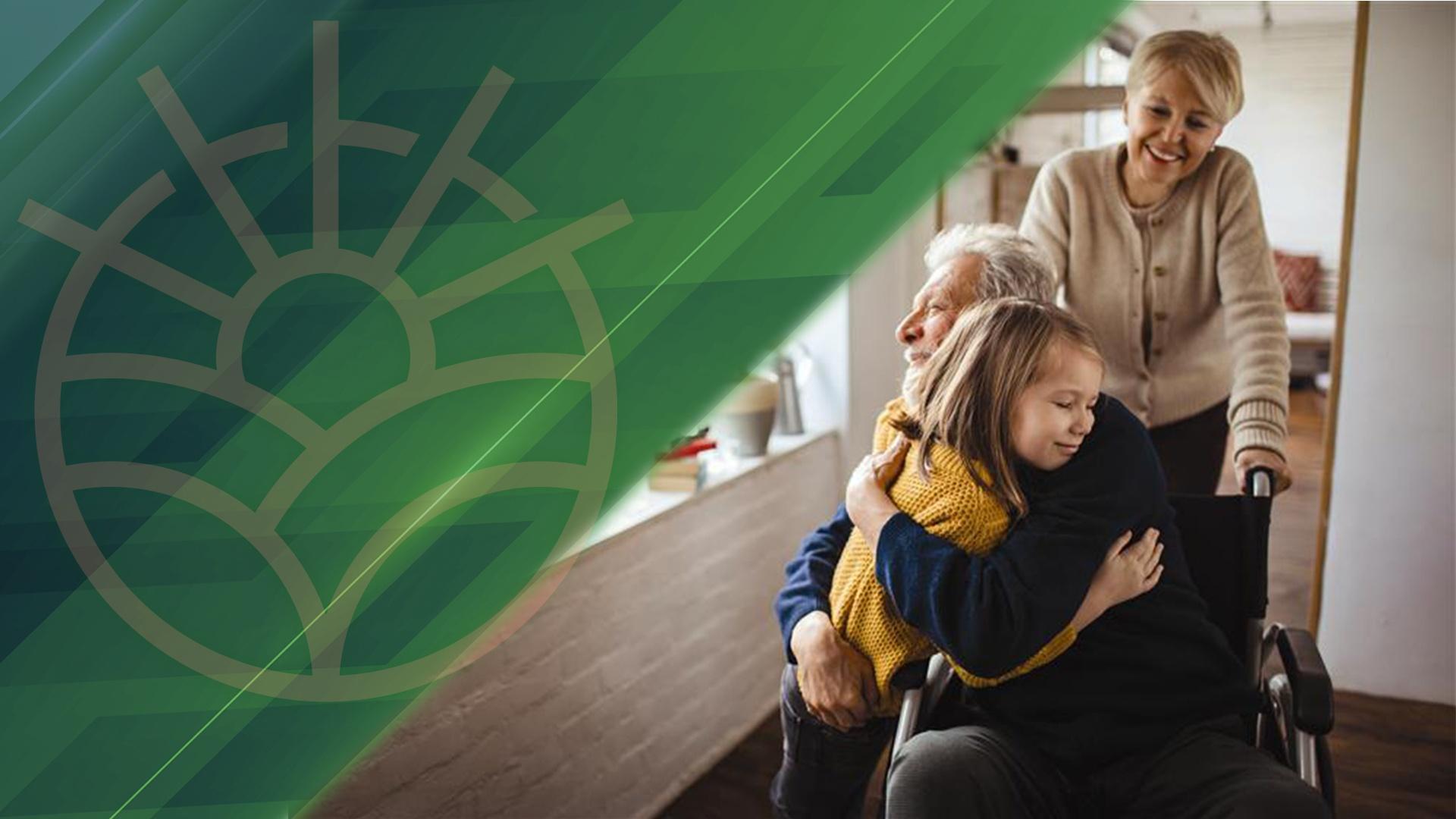
In this Next Chapter Forum, Dr. Wayne Tuckson and a panel of experts discuss family caregiving plans. They explore in- and out-of-home options, support systems, and community resources. They also offer advice on how caregivers can allot time to take care of themselves.
Here are three takeaways from the program:
- 1. As former first lady Rosalynn Carter stated, nearly everyone will either receive care during their lifetime or provide it – or both. There are approximately 600,000 caregivers in Kentucky, with backgrounds that run the gamut from spouses to children and grandchildren to more distant relatives and even friends.
There is no standard path to becoming a caregiver, says Barbara Gordon, director of community engagement at the University of Louisville’s Trager Institute and an instructor at U of L’s Kent School of Social Work. Most caregivers are family members who help older parents, grandparents, or other relatives, but they can also be friends caring for friends. Those who are the only child of parents will, whether they want to or not, eventually assume a caregiving role when one or both parents become ill, Gordon explains. Siblings, on the other hand, will need to have honest conversations about devising a caregiving plan and dividing responsibilities.
“I also know many families where the caregiver was chosen – not because they wanted to be the caregiver, but because they had the most resources. They had the availability, they weren’t working, etc.,” she adds. “But then I also know those that willingly care for their loved one because they have that propensity. They are a ‘care-er,’ they were born with that gift for caring. It’s a real thing.”
In most cases, family members don’t share caregiving duties equally. Kathy Washington of Louisville, who had prior experience as a private caregiver and agency caregiver, assumed primary responsibilities for taking care of her father after he was diagnosed with prostate cancer. Her professional experience gave her the knowledge to direct her siblings in the best practices for providing care as they rotated trips to be with him in western Kentucky.
Likewise, Gordon, who is the oldest daughter among nine siblings, served as caregiver to both of her parents before they passed and also for her younger brother. She relocated her mother to Kentucky, moved her into the family home, and cared for her for five years while also raising young children. Gordon says during that time she was a member of what’s called the “sandwich generation” – young to middle-aged adults who simultaneously serve as caregivers to their own children and to aging loved ones.
For Anthony Jackson, a project manager at Lockheed Martin and an AARP volunteer, his ability to work from home helped him and his wife take the lead in caring for his parents. Jackson’s brother visited from a distant state to help when he could. And Margaret McClosky, a retired geriatric social worker and AARP volunteer, cared for her aging parents years ago and more recently for her husband.
The majority of caregivers are female, but many males also serve. Jackson says taking care of his parents was something he wanted to do ever since he was a child, and he moved to Kentucky for that purpose.
“(I wanted to) be able to support them and make sure they could do everything they needed to do, and make sure they had the care that they needed,” Jackson says. He discussed his intention beforehand with his wife, and they both agreed to work together in providing care.
For McClosky, her two situations were different in terms of the assistance she received. McClosky’s brother, who lived far away, helped long-distance by making phone calls about financial matters and to physicians for her late father. When McClosky cared for her late husband, his adult children from another marriage were initially reluctant to assist with in-home care, but one of them eventually did step up.
“I had him at home until the last few months (of his life), and it did wear me out,” McClosky says. “But out of love for him, I stuck it out. I have to say that one daughter did finally say, ‘Would you like for me to come over and sit with him on Sundays, so you can go to church?’”
- 2. Many caregivers are so focused on the myriad responsibilities of providing care and so emotionally committed to helping that they neglect their own mental and physical health. But they should not ignore their own wellbeing – for their own sake and for the benefit of the person receiving care.
McClosky and Jackson both cared for their aging parents, which created a new dynamic in their relationships. As children, they obeyed their parents. As young adults, they received mentorship. Now the adult children are directing their parents’ lives. Yet they say their unconditional love remained, giving them the resolve to provide the best care to their parents they could.
“I never felt resentment. I looked at them at their peak, and said, ‘That’s who that is,’” Jackson says. “How could I feel resentment when everything that I am and everything I’ve achieved is because of them. And so, I’d say, ‘They’re just having a tough time and right now, this may be the toughest time. But I’m tough enough too, I’m going to support them.’”
One emotion that often surfaces during caregiving is grief, Gordon says. Caregivers may begin to grieve for their family members or close friends before death, as they experience how much that person has lost in terms of their physical faculties and personality. “While you’re dealing with your loved one, you may experience those things, but you may not understand why you’re feeling that way,” she says. “I’ve had caregivers often say, ‘Why am I just breaking down and crying? I love taking care of my mom – what are these tears for?’ And often it’s because they’re grieving, they’re grieving the loss.”
Gordon conducts a training program called Caring for the Caregiver at the Trager Institute. “This helps people understand that it’s critical to take care of themselves if they want to continue to take care of their loved one,” she says. Gordon notes that research indicates that caregivers are at a higher risk of early death themselves than they would be if they weren’t giving care.
“This is typically because they’re not caring for themselves, including not going to doctor’s appointments, not taking their medications properly, or not eating properly,” she explains.
Allocating time for what’s called respite care is an integral part of caregiving, Gordon continues. Caregivers must find a way to take regular breaks from the stress and burden of caregiving, whether through help from family, adult day care, or other options.
McClosky admits she was quick to recommend outside help to other folks who were caregivers, but she was reluctant to access those resources herself while she cared for her husband. “I really had a hard time realizing that others could care for him,” she recalls. “In retrospect, the (lack of) self-care was the biggest issue for me.”
- 3. Many resources are available for caregivers in Kentucky and through national organizations, including financial assistance, peer support, meal delivery, and legal aid.
Most caregivers lack prior experience with the rigors of care and are unprepared for the time and attention they must devote to assisting their loved one. The burden can be considerable, and in many cases also require economic assistance if the person being cared for has limited income and/or savings.
“They need to know about the resources that are available to them and to know that they are not caregiving alone,” says Amanda Davis, the national family caregiver coordinator with Kentuckiana Regional Planning and Development Agency (KIPDA). “There are people out there that can help them and there are resources they can tap into to bring into the home, whether that’s from the Older Americans Act, through the Area Agencies on Aging, and the different programs we have to offer… educating people so when they are thrust into (caregiving) all of a sudden, they know who to call and where to get resources.”
Davis explains that caregivers who have their loved ones living at home will be faced with ongoing challenges of paying for assistance, food, and supplies. If their loved one enters a nursing home and goes on Medicaid, those financial burdens would cease, but many caregivers do not want to separate or relinquish responsibility. Furthermore, most elderly individuals prefer to live in their homes or in a family setting for as long as possible.
Fortunately, Davis says home-based caregivers can access voucher programs through the National Family Caregiver Program, which will help pay for supplies like incontinence diapers and bathroom equipment that aren’t covered by Medicare. KIPDA also contracts with the Legal Aid Society of Kentucky to assist caregivers in obtaining powers of attorney and other documents, Davis adds.
There are several resources offered through Kentucky’s Cabinet for Health and Family Services designed to assist caregivers, says Victoria Elridge, commissioner of the Kentucky Department for Aging and Independent Living. For starters, Elridge describes the state’s Kynect Resources as a “one-stop-shop” site where a person can call up all resources are available in their area. This can include nutrition (Meals on Wheels), in-home assistance, financial assistance, and community and social programs.
Elridge says that since Andy Beshear became governor, more than 17 million meals have been provided to Kentucky seniors age 60 and older through their local senior centers. In addition, utility assistance is available to those who qualify through local Community Action Agencies.
“One of the programs that Team Kentucky has done in recognizing that we needed more resources is launch PACE – Program for All-Inclusive Care for the Elderly,” Elridge says. PACE offers nursing-home level services to elderly Kentuckians who choose to live at home with or without a caregiver. The program includes respite care services, Elridge says, and is funded by Medicaid, Medicare, or private pay.
On a national level, Kathy Washington recommends caregivers contact organizations devoted to the disease or condition afflicting the person being cared for, such as the American Cancer Society, the American Lung Association, the Alzheimer’s Association, and A Stroke of Grace. These nonprofits have their own specialized caregiving plans that can address particular problems that may affect persons with the disease in question. And when loved ones advance in their disease, Washington advises contacting hospice care and accessing their myriad resources that assist people at the end of life.
“One thing that I think provides a good overview is the AARP Family Caregivers Guide,” Jackson says. “It provides a lot of information and resources, and you can reach out and understand what it takes to build a team. And your team is not always your family – it can be a number of different individuals that in some cases are professionals, and in other cases are caring neighbors.
“Start investigating as early as possible,” he adds. “Don’t wait until (your loved one) is invalid or has dementia, or get to a point where they’re not capable of supporting themselves. Make it a conscious effort to start putting something in place, even if you’re in your late 30s or early 40s.”
While there are many programs available to assist with caregiving, Barbara Gordon warns they do have limitations. “They won’t take care of everything,” she says, “and that brings me to the point that I really want to make: We need more resources, programs, and services to support caregivers, more than we are supporting them now.”