Some 4 million people a year travel to Kentucky’s Lake Cumberland region. In the last five years alone, spending by those visitors has increased by nearly 27 percent.
But while tourism and recreation are major drivers for what’s been dubbed the “Houseboat Capitol of the World,” local officials want to be known for much more.
“We love Lake Cumberland... but we are hub for factory, industry, manufacturing, health care,” says Bobby Clue, Somerset-Pulaski County Chamber of Commerce. “There’s a lot of special things that are going on.”
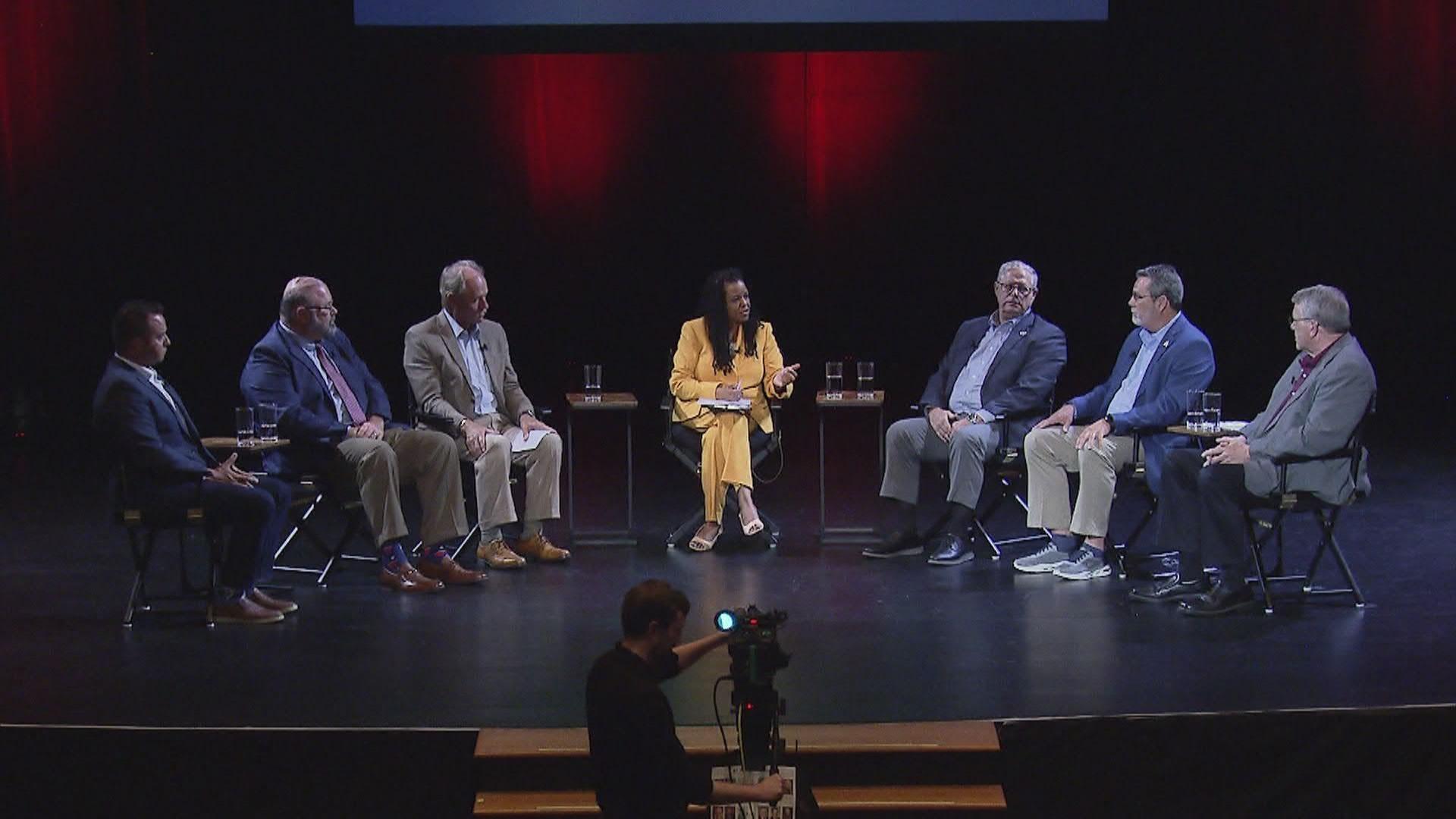
Kentucky Tonight assembled a panel of regional civic leaders to discuss their economic development efforts and some of the factors that are driving the growth.
A Vision for Smaller Communities
Anchoring the region is Somerset, the seat of Pulaski County, which has experienced a resurgence in recent years with new shops, restaurants, and entertainment venues like The Virginia, a recently restored 1920s-era movie theater that now hosts concerts, stage shows, and classic films.
Two-term Somerset Mayor Alan Keck and others shepherded a revitalization that transformed a once deserted downtown into a community gathering place. Keck says vibrant downtowns like what they want to create in Somerset are the heartbeats of rural communities.
“We have something special here – a hidden gem,” says Keck. “I think that really has ignited this momentum that we see across our region now.”
The success of Somerset has inspired neighboring communities to take similar chances. State Rep. Ken Upchurch, a Republican from nearby Monticello, says his hometown is growing as well with new employers and a new concert venue that’s in development.
“Their leadership... and their vision has given smaller communities in this area the idea that, hey, if they can do it, we can also,” Upchurch says of Somerset. “They’ve been through the fire and they’ve helped us avoid some of the landmines, so we appreciate that a lot.”
But economic development success can also bring challenges to rural communities that may not have a large pool of trained workers, infrastructure and housing that allows for growth, or even public transit options to get people to and from work.
Somerset Community College is a key player in workforce development in the region. School President and CEO Carey Castle says SCC had more than 8,000 students last year alone, and some 3,000 graduated with an associate’s degree or other credential. He says the college is focused on preparing students to work in local businesses and industries
“We aren’t just about education. We’re about working with the different groups that are in the community,” says Castle. “We talk and meet with them on a regular basis and we figure out what is it that SCC can do for you to help you grow and likewise add to the tax base and to the growth of this area.”
The leaders say building a workforce, whether from local talent or by attracting people to relocate to the region, will require a continued focus on providing a superior quality of life for people.
“We want to keep our best and brightest here,” says Lonnie Lawson, president and CEO of The Center for Rural Development in Somerset, a non-profit organization created by Congressman Hal Rogers (KY-5) to foster growth in southeastern Kentucky. “We want them here and the only way we do that is to have these quality-of-life items like the restaurants, like the theaters, and jobs. We’ve got to create jobs that will keep them in this region.”
State Rep. Rick Girdler (R-Somerset) says the General Assembly is doing its part to make Kentucky more attractive to new businesses as well as new residents. He points to Republican-led efforts to reduce income taxes, improve infrastructure, and end right to work and prevailing wage laws.
“The less laws, the better off we are.” Says Girdler. “Let’s get out the way of that businessman that wants to do business.”
The Need for Housing, Infrastructure, and Public Transit
With business and population growth comes a need for more housing. While the entire state has a shortage of more than 200,000 homes and rental units, Girdler says housing construction is underway in the Lake Cumberland region, and he expects more in the future.
“Housing, I think, will come if we get the workforce here. We don’t have a need for housing until the workforce comes,” says Girdler. “Let’s get the workforce here.”
One possible option for more affordable housing is being developed at Somerset Community College. Local leaders recently gathered at the SCC campus to watch construction of Kentucky’s first 3D “printed” house. Castle says the concrete structure built by the school’s additive manufacturing program is affordable and resistant to tornadic winds, flooding, and mold.
“It’s just a whole new opportunity to think about how we build houses in the future,” says Castle
Fostering new jobs through broadband internet access has been a major goal of The Center for Rural Development. Lawson says his organization has worked since 2005 to deliver internet service to every household in the 45 counties they serve. Originally that meant laying fiber optic cable.
“We have realized that that’s probably not possible,” says Lawson. “If you’re the last house 2.5 miles up a hollow, fiber may not be feasible there, but we can still get you high speed internet no matter where you are.”
Where the isolated, rugged terrain may preclude fiber optic cable, internet might be delivered by wireless options like satellite or cellular service. Once southeastern Kentuckians are online, Lawson says they will have new opportunities for remote work in a range of fields.
Traditional infrastructure is also critical to luring new businesses to the region. Upchurch says road and bridge access has improved here in recent years. He says the legislature appropriated $135 million this biennium for road projects in Clinton, Wayne, Russell, Pulaski, and Rockcastle Counties, with another $450 million to come in the next four years.
“Because of the economic development that’s going on in this area, we need that infrastructure,” says Upchurch. “As we backfill that infrastructure in, you’re going to see more jobs and opportunity coming the Lake Cumberland region.”
Even with new roads, some people may not have the transportation they need to get to their jobs. Bobby Clue of the Somerset-Pulaski County Chamber of Commerce says he often sees people walking to work along the major thoroughfares in the region. He says that’s generated dialogue among local leaders about the need for a public transit system.
“It doesn’t have to be the same solution here that it would need to be in Bowling Green or Lexington,” says Clue. “It could be a much smaller collaboration maybe with the state or the county or the city, or maybe even a regional fix.”
Keck says public transit could also help tourists get to Lake Cumberland and other local destinations. He says a decade ago, issues like housing and public transportation weren’t on the radars of local officials. He says these are good problems for a community to have.
“I’m excited about that,” says Keck. “What a beautiful challenge for a small town in rural America to have to try to solve.”