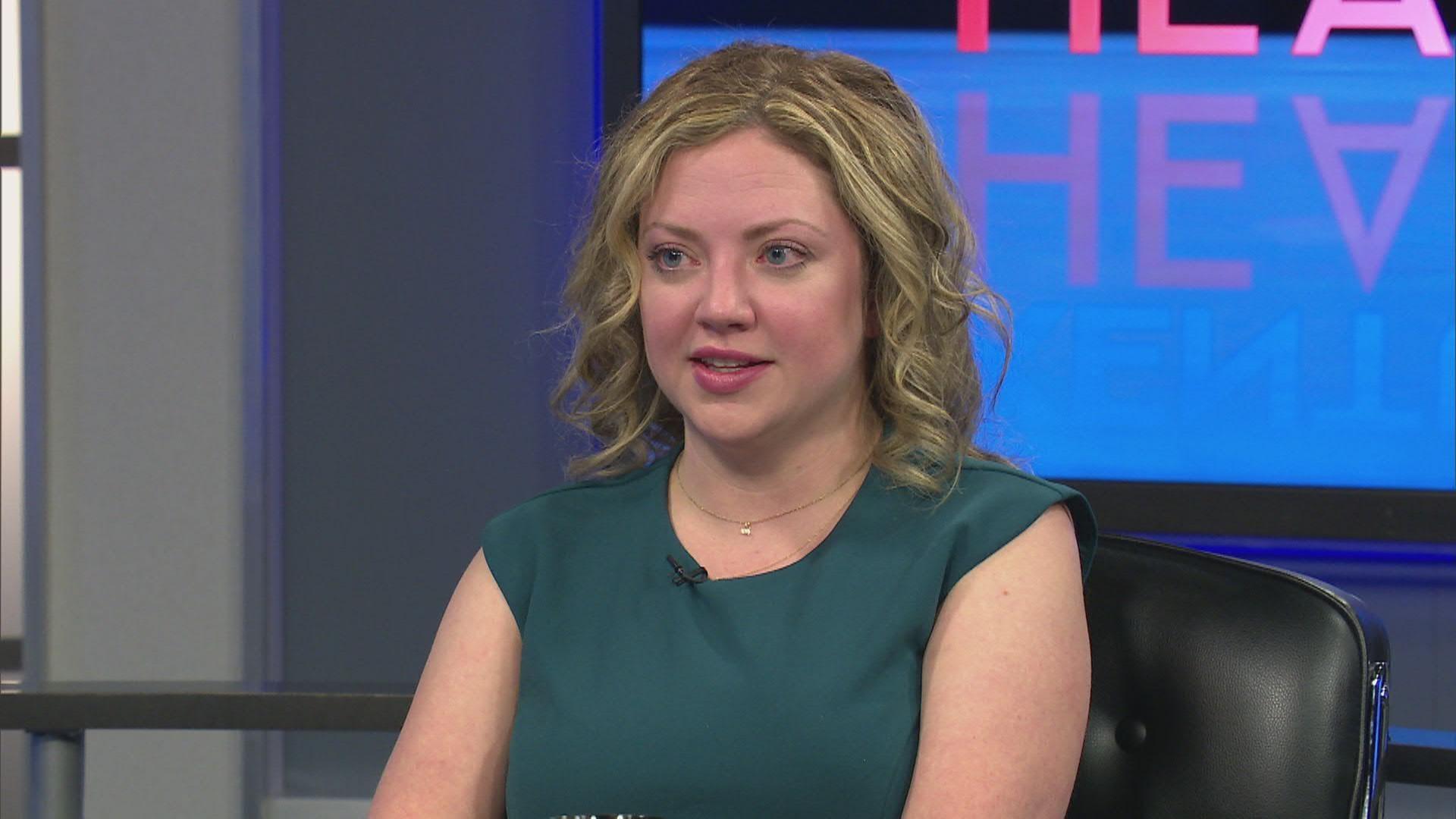

In this episode of Kentucky Health, host Dr. Wayne Tuckson welcomes Dr. Manda Maley, a vascular surgeon with UK HealthCare and assistant professor at the University of Kentucky College of Medicine. They discuss diagnosing and treating venous and lymphatic diseases. Here are key takeaways from the program.
1) The vascular and lymphatic systems are essential for human life. The vascular system consists of arteries and veins that move blood from and to the heart, while the lymphatic system transports white blood cells that fight infection. Several diseases affect these systems, and edema is the most common symptom.
As a vascular surgeon, Dr. Maley says she treats conditions ranging from varicose veins, a common ailment caused by weakened valves in the veins, to edema or swelling of fluid, to far more serious conditions like arterial blockages in the extremities, aneurysms, and deep vein thromboses. Vascular disease is much more common in women, Maley says, and persons who are on their feet for most of their day due to employment or other requirements are at higher risk.
Veins must work against gravity to move blood from areas of the body such as the legs back to the heart. If veins are weak, Maley explains, blood can collect in them and cause them to swell.
“Varicose veins are small, superficial veins that normally wouldn’t have blood pool into them, and they become enlarged when you are up on your feet because gravity is pulling the blood back down,” she says. Valves that normally shut off to streamline the upward movement stop working effectively, resulting in blood entering smaller veins and causing them to bulge out. Smaller veins that suddenly become visible on the skin due to blood pooling are called spider or reticular veins. Larger ones that plump out on the skin’s surface are varicose veins.
Varicose veins in the legs are usually not serious, Maley says, although they may be regarded as unsightly. “If they progress enough to cause an ulcer, which is a skin breakdown from swelling and tension, those ulcers can become infected and that can be an issue, but they’re not life threatening.”
Edema can occur if a person stands or sits for long periods of time and also by venous insufficiency, “meaning the veins aren’t working well against gravity to get the blood back up to your heart,” she says. Symptoms include itching, swelling, and tiredness of the affected limb(s).
Pooling of blood in the legs can occur in one limb or both, and Maley stresses that if only one limb is affected, a patient will be tested for deep vein thrombosis. This is a potentially fatal condition whereby a blood clot forms in a primary vein not visible on the skin. If the clot breaks loose from its origin and travels to the lungs or brain, it could cause a pulmonary embolism or stroke.
“We usually do an ultrasound and then physical exam to see if we think it’s a blood clot or not,” Maley says. She explains that a common cause of deep vein thrombosis is immobility such as after a surgery or a fracture. Since veins don’t have a pump system, our muscles help move blood through the veins. Inactive muscles may fail to promote normal blood flow, leading to a deep vein thrombosis.
Maley says people who are obese or with a family history of having blood clots are also at a higher risk for developing the condition.
2) Treatments for vascular disease range from physical activity and over-the-counter remedies such as compression footwear to outpatient procedures.
The first step to preventing and treating both varicose veins and edema is to wear knee-high compression stockings which are available at pharmacies and department stores. “Everyone should be wearing compression stockings if they have a job where they’re up on their feet or sitting in a chair quite a bit,” Maley says. “It really does help, especially for women who have a family history of varicose veins or have had several pregnancies or have a profession where they’re up on their feet. Some people can relieve all of their symptoms and get rid of all of the spider veins just by wearing compression consistently.”
Maley recommends sclerotherapy – injecting medicine – for persons who want to treat spider veins for cometic reasons. If symptoms from varicose veins such as itching, swelling, and numbness begin to interfere with a person’s daily activities, she will perform what’s called radiofrequency ablation, whereby she deadens the affected superficial vein and ensures that blood is redirected to deeper veins inside the limb that are working normally.
As a basic practice, Maley recommends getting up and moving around as often as possible throughout the day, with special attention paid to times when one’s ability to do so may be restricted – on an airplane or during a drive lasting several hours, for example.
“Immobility is a risk for having a blood clot, so I always tell my patients to wiggle their feet at their ankles and get up and walk when they can,” she advises.
3) Lymphatic swelling occurs when excess fluid builds up in an affected area, usually due to a traumatic event or invasive surgery. It can lead to a potentially serious infection, but early treatments are effective.
“Usually in the United States, (lymphedema) is caused by some kind of trauma or cancer treatment,” Maley says. If portions of the lymph nodes are removed to test for cancer in a nearby organ, she explains that lymphatic fluid may pool in the affected area, an example being in an armpit when testing for breast cancer in women.
Complications from lymphedema are in some ways similar to vascular swelling, Maley says, starting with the breakdown of skin tissue after it has been stretched. “Then you can get something called cellulitis, which is an infection and inflammation of the soft tissue in a limb, and that can eventually, if it’s not treated, progress into sepsis, which could be life-threatening,” she explains.
To treat the swelling, Maley says compression stockings and/or physical therapy with massage may be helpful. The patient may also be prescribed a lymphedema pump for at-home use. This is a sheath which is placed on the arm and pushes the fluid out into the limb. “You usually do it for an hour in the morning and an hour in the evening,” she says.