
Morels are the rock stars of mushrooms, and Irvine celebrates them at the annual Mountain Mushroom Festival; Berea’s Spoonbread Festival highlights this traditional Appalachian food; and Kentucky can boast the only American author awarded both a fiction and a poetry Pulitzer Prize, to Guthrie’s own Robert Penn Warren.
Morel mushrooms have a lot of monikers: dryland fish; sponge caps; Christmas tree mushrooms. They also have a lot of fans, many of whom will travel to Irvine’s Mountain Mushroom Festival each spring to stock up on these edible treasures.
Morels grow wild in and around Estill County, and hunting for them is a family activity for many locals. Robin Reed of the Mountain Mushroom Festival explains that timing is key to finding morels.
“When the leaves just first start coming out, that will tell you that the soil is also warming up enough for the mushrooms to grow,” He says. “The secret to hunting the mushroom is that you want to get to the mushrooms before the flora gets so thick that you can’t find the mushrooms. They’re probably still growing even after the flora gets up so tall, but you can’t find them.”
Morel mushrooms have a conical shape and a distinctive, creased texture on the cap. When mature and ready to eat, they’re hollow. Reed says their flavor is more like meat than other varieties of mushroom. They’re used in sauces or can be sautéed or fried.
“The Mountain Mushroom Festival started in 1991 to represent the unique hunting of the morel mountain mushroom,” says festival chair Francine Bonny. “It is held the last full week of April which is generally thought of as the peak season for the morel mushroom. We have approximately 20,000-plus people who attend. Many are our local people plus we have a lot of people who grew up here but come back. It’s a homecoming.”
In addition to purchasing fresh morels and sampling mushroom dishes, attendees can visit the approximately 150 arts and crafts booths or watch the cooking stage.
“We feel like the mushroom festival is important to our community,” says Bonny. “Many people still do not know what the morel is. We try to educate the public when they come to the festival. We are a people who are friendly folks. We’re proud of our traditions of mushroom hunting and the culture that we enjoy in our daily living.”
Spoonbread Festival
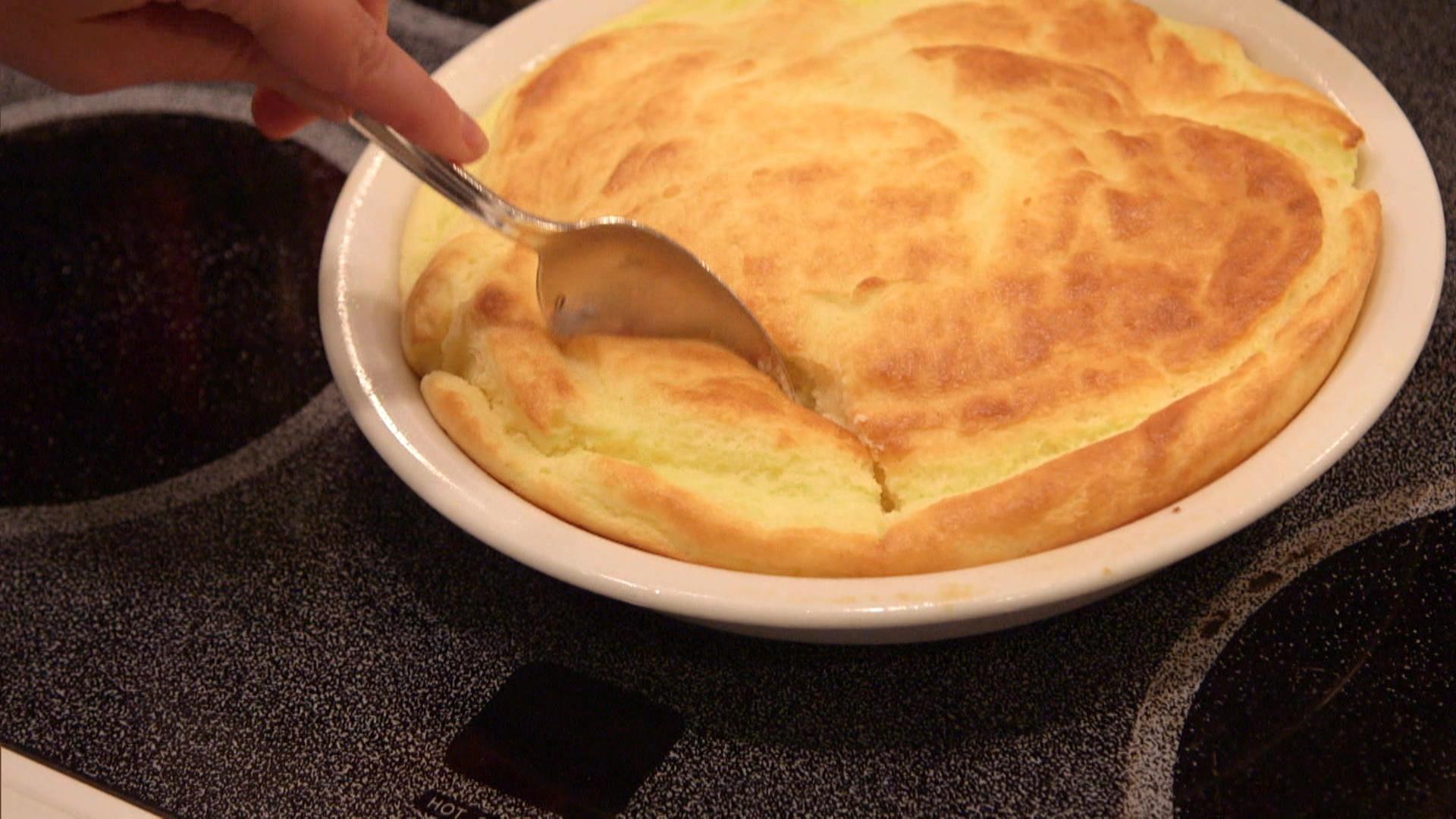
When asked to describe Spoonbread, Spoonbread Festival Co-Director Sandy Rowlette has an easier time explaining what it isn’t than what it is.
“Everybody you talk to is going to give you a little bit different description of it,” she says. “It is not corn pudding. It’s not bread pudding. It’s definitely not a main dish. It’s not a dessert. And it’s not really a bread. It’s a phenomenal dish, but it’s definitely an Appalachian dish. If you’ve never tasted it, it’s just something you have to experience.”
However you classify it, spoonbread is a staple at the Boone Tavern in Berea. Berea is also home to the three-day Spoonbread Festival, which takes place annually on the third full weekend of September.
“Here at the festival, we normally make about 400 pans, sometimes a little more, sometimes a little less,” says Rowlette. “It’s served by the spoon into a small bowl and we get 12 servings per pan, so that’s about 4800 servings throughout the weekend.”
The distinctive dish has a long history in the region, according to food writer Joanne Drilling.
“Supposedly it comes from a Native American dish that was called suppone,” she says “It was basically just a mush with boiling water and cornmeal.”
Drilling says the dish as it’s known today in Kentucky dates back to 1904 in The Blue Grass Cook Book, written by Minnie Fox, a wealthy socialite from Paris, Kentucky.
“Spoonbread is basically kind of a cross between cornbread and a custard,” says Drilling. “There’s a wide range of what I consider to be spoonbread because there are different techniques. Most of the recipes have similar ingredients: There’s butter; there’s eggs; there’s white cornmeal; milk or buttermilk; powder; baking soda. Because of the eggs, because of the milk, it is a lighter like a souffle, it’s lighter like a custard. The Boone Tavern recipe that I like the most has a texture kind of similar to like a flan, to a custard flan, and it does have that kind of corn flavor that you would associate with cornbread.”
The dish is served with either butter or honey, depending on preference.
“There’s kind of a debate over which one is the best,” says Rowlette. “Some old timers even use molasses. But here at the festival we serve it with butter or honey. You have to come and taste it yourself to decide which one you like.”
Robert Penn Warren
Writer Robert Penn Warren earned a place in history for being the only person to be awarded a Pulitzer Prize for both poetry and fiction. More than 70 years after his lauded novel, “All the King’s Men,” was published, he’s still a hero in his hometown of Guthrie, Kentucky.
“When I return to my father’s birthplace in Guthrie, Kentucky, I feel a tumult of different emotions,” says Warren’s daughter, Rosanna Warren. “I feel grief for his loss again in a fresh way. I feel touched by the reality of his past, his youth, the world of his youth. And I feel very moved by the landscapes of western Kentucky.”
Warren was born in Guthrie, a town on the Tennessee border, in 1905.
“Many of the businesses from that time are gone now, but one still remains,” says Carrie Cantarelli, director of the Robert Penn Warren Birthplace Museum. “It is Longhurst General Store. It’s owned and operated by Bill Longhurst. It was passed to him from his father.”
“When ‘All the King’s Men’ was first released, it was released here in Guthrie at a place we called the Lyric Theater,” Bill Longhurst tells Rosanna Warren. “I was just a small person at that time and Mr. Warren came in – your grandfather. After he left I asked my dad, and he explained to me about ‘All The King’s Men,’ and that was my first recollection of knowing something about your father.”
Warren was influenced by his family in the small town of Guthrie.
“My father revered his father, Robert Franklin, who had probably only a sixth-grade education and came from a tough background,” says Rosanna. “He worked as a store clerk and he was bright and people liked him. I think he even helped found the little bank here and worked as a cashier and eventually became quite a genteel persona and was able to marry his sweetheart, Anna Ruth, and have the three children.
“My grandmother, Anna Ruth Penn Warren, was also very literary,” Rosanna continues. “She was a schoolteacher. She loved poetry. And she was very strict about making sure her three children, my father, his sister Mary, and little Thomas, did their homework. And the family was very close. Very tied in to the rituals and routines of family life, which included a lot of reading out loud to the children by the parents.”