

Growing up in Christian County in the 1950s and ’60s, Gloria Jean Watkins reveled in the calls of birds, the nearby fields of tobacco, and the love of multiple generations of family. But the bookish girl also knew she wanted a bigger life than a Black female from a working-class family in a segregated southern town could typically expect in those days.
“I wanted to be an intellectual, a thinker, a writer [and] that went against so much of the grain of how I was raised, she says.
From that youthful determination came one of the most influential authors and cultural critics of the last half century, a woman whose more than 30 books were published in 15 languages and explored gender, race, and class through the lenses of history, spirituality, and community.
Each of those books featured not her birth name, but the pen name of bell hooks – the name of her maternal great grandmother, a woman who also had a reputation in the family for strong and powerful speech.
“A lot of my using the name bell hooks has to do with calling forth those female ancestors with whom we have had that connection that actually live through us in a kind of psycho-history,” says hooks. “I think that that’s so crucial that we claim those ancestors.”
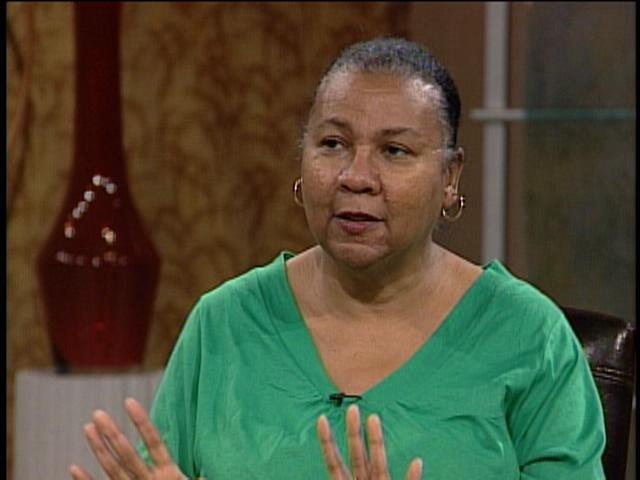
bell hooks reflected on her life and career in a 2008 interview on KET’s Connections. The Hopkinsville native and Berea College Distinguished Professor in Residence in Appalachian Studies died on December 15, 2021, at the age of 69.
Pushing the Boundaries of Feminism
The young girl with big dreams knew shew was going against southern tradition that said Christian women should remain largely silent. But hooks says she was fortunate to have a father who enjoyed reading and mother who wanted her daughters to be educated so they wouldn’t have to rely on any man. She also saw the long-term commitment that her parents and her grandparents shared across more than 60 years of their respective marriages.
“They were fine, disciplined examples of the aspects of love, of care, and commitment,” says hooks. “These two marriages lasted so long precisely because they took place in the context of community.”
Her academic journey took hooks from the then-segregated schools of Christian County to Stanford University in the 1970s. A master’s degree at the University of Wisconsin and a doctorate at the University of California, Santa Cruz soon followed. hooks says leaving a country town for the big city is an archetypal American journey.
“The great thing about being from the country and the small town is that you can go out and have a wider experience, but you also had the deep and profound experience of growing up in a small community where people care for one another,” she says.
While still an undergraduate, hooks began writing “Ain’t I a Woman: Black Women and Feminism,” which would be published in 1981. (The title comes from a speech by abolitionist Sojourner Truth.) The now-classic work explored the double whammy of racism and sexism that Black women historically endured. In the process hooks argued that feminism should embrace a wider range of people and life experiences.
“Feminism is for everybody,” she says. “I think any genuine feminism really is about wholeness and self-love for women and men.”
hooks continued to explore these themes in her subsequent books of essays, poetry, and other writings. Each one continued to bear the name of her great-grandmother written in lower case letters so, as hooks explains, readers would focus on the content of her work, not the person who wrote it.
As her intellectual star continued to rise, hooks lectured at prestigious schools across the country, from Yale University, to Ohio State University, to San Francisco State University.
But the pull of home never left hooks, who continued to visit family in Hopkinsville at least once a year. And while she may not have been labelled a Kentucky writer, hooks says her upbringing here always influenced her work.
“All the writing I’ve done and currently do has the particular flavor of my growing up in rural Kentucky hills as a child,” she says.
As a student, hooks says she was taught that bringing too much of her Kentucky life to her work would label her as a local writer and not someone whose books would have universal appeal. She says Wendell Berry proved that doesn’t have to be the case.
“Those old ways of thinking about geography don’t determine a writer’s fate as much as they used to,” says hooks.
The Pull to Return Home
Like Wendell Berry, hooks left Kentucky to study and work in California and New York. And like Berry, hooks made the decision to return to her native state to live.
“He’s been a role model for me and other Black folks returning to the south from the north,” she says.
hooks landed at Berea College in 2004, where she says she felt an affinity with the students, who, like her, largely hail from rural, working-class roots. She says she also felt at home in the small community at edge of the Appalachian Mountains.
“I just feel a tremendous sense of blessing that I can be in Berea, Ky., where so many people are committed to peace and justice and sharing of resources, of community in its very best sense of the word,” she says.
The move did not come without some reflection, though. hooks says she remembered the discrimination she experienced growing up in Kentucky. But she realized that as racism and white supremacy rose across America, Kentucky no longer felt like an outlier to be avoided, especially when there were so many other things she loved about the state. She also wanted to provide an example to young Kentuckians that they don’t have to leave the commonwealth to pursue an intellectual life and career. And while her Manhattan friends questioned her decision to come home, hooks says it was the right choice for her to return to the values and landscapes of her youth.
“Part of why I wanted to come back home is that my Kentucky roots are really what made me who I am, and it’s the values that I grew up with,” she says. “I wanted to be back in a world where those values really matter.”
hooks explored the ideas of home, community, and stewardship in her 2008 book “Belonging: A Culture of Place.” In calling for a more sustainable approach to living, hooks recalled her African-American ancestors who were deeply connected to the land they worked.
“This is our history that people are forgetting,” says hooks. “Image what our world would look like if Black people were coming back to their agrarian roots and growing their own food and being engaged in local food production.”
Sitting on the porch of her home in the hills outside of Berea, hooks says she loves to close her eyes and listen to the sounds of nature around her. That’s just what young Gloria Jean Watkins did with her siblings when they were kids in western Kentucky. Now for bell hooks, it’s part of closing the circle on her own journey from the small town to the big cities and back to a small town.
“I’m a seeker on a spiritual path because I feel that it’s that spiritual grounding of my being that has sustained me, and buoyed me, and made me who I am,” says hooks. “I plan on staying here until I die.”