Preserving Kentucky History | Dr. Doug Boyd
Dr. Doug Boyd, director of the Louie B. Nunn Center for Oral History at the University of Kentucky, has spent his career capturing stories that define who we are, where we’ve been, and where we’re going. For Boyd, the work of oral history is not just for researchers and history fans; it’s something to be enjoyed and accessible to all. That’s part of why his collaboration with KET – Kentucky’s largest classroom – has been such a natural fit.
Boyd, a Cincinnati native, first connected with KET through one of its most well-known personalities. Tasked with incorporating popular Kentucky Afield host Tim Farmer into a promotional video for the Kentucky Historical Society, it was discovered that Boyd needed a lesson in fly-fishing. Farmer arranged for an on-camera lesson for an episode of Afield. “It was sort of pitched as ‘let’s put you on camera, let’s teach you how to fly fish. If Doug can do it, anybody can do it.” What transpired from that unique encounter has grown into a meaningful relationship with KET.
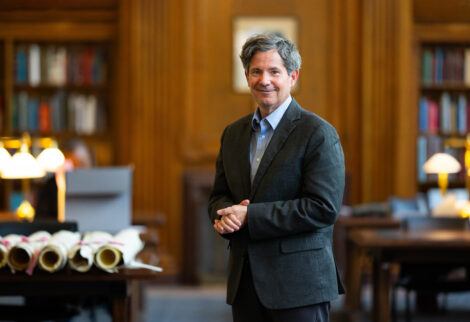
Boyd appreciates the multi-faceted programming KET provides. “KET is about enlightenment,” he said. “It is about featuring stories that really illuminate what is best about the people and the culture in Kentucky.” A self-proclaimed devotee of the weekly news program Comment on Kentucky, Boyd is confident in the information he receives from the host and guests. “The conversations that are happening there, especially in a time with so much media division – coming to KET is very comforting and trustworthy for me. I know what I’m hearing is straight talk, something that I can trust and take away as real and accurate and meaningful.”
KET is about enlightenment.
Doug Boyd, Ph.D.
Boyd notes how KET brings together education, news, cultural programming, history, and access, making it uniquely positioned to reflect and preserve Kentucky’s identity, both past and present. “You bring all those things together into the package that is KET,” Boyd said, “and KET is just such a valuable asset to this state.”
Boyd’s own work – developing tools like the Oral History Metadata Synchronizer (OHMS), a software system used in libraries and archives in 52 countries around the globe – has always centered on making stories more accessible and meaningful. His partnership with KET has included oral history-based documentaries and contributions to public programming that showcase the voices and experiences of Kentuckians. “For me, being a historian and working in the history business, I’ve gravitated towards the history aspects of KET, which are amazing. Whenever there’s a historical documentary airing [on KET], I’m all in.”
A Kentucky transplant, Boyd is appreciative – even sentimental – about the role KET has played in his life here. “I’ve been here my entire adult life, giving me a general informational sense of being able to connect with Kentucky. KET has really helped me forge that identity.”
The shared importance of the work the Nunn Center for Oral History does in comparison with the careful collection and curation of Kentucky’s stories that KET produces are both roles Dr. Boyd recognizes as crucial parts of today’s modern media landscape. As someone who has spent decades not only shaping how stories are preserved and shared but also watching the evolution of documentary processes, Boyd doesn’t offer this praise lightly. “It’s [historical preservation] about education, it’s about storytelling, it’s about information. It’s about something larger – a collective recording and understanding of who we are as a people and as a place, of how we got here. And you bring all those things together into the package that is KET.”